Category: Press Release Distribution

  • How to Distribute a Press Release and Get Real Results

    How to Distribute a Press Release and Get Real Results

    Getting your news out there is compulsory if you want people to know your brand exists. 

    Whether you are launching a product, announcing a partnership, or sharing an important company update, a press release is still one of the most reliable ways to communicate that information in a format the media and search engines understand.

    But a press release that is not prepared properly or not distributed through the right channels will not bring much value. 

    It might get published somewhere, but it will not reach your target audience. And this is where most people get it wrong.

    They treat distribution as a single step. Upload the file, click publish, and hope something happens.

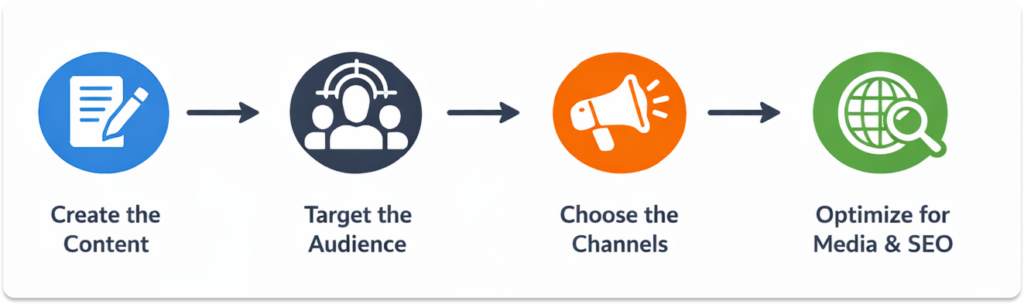
    In reality, getting real results from a press release is a process as follows:

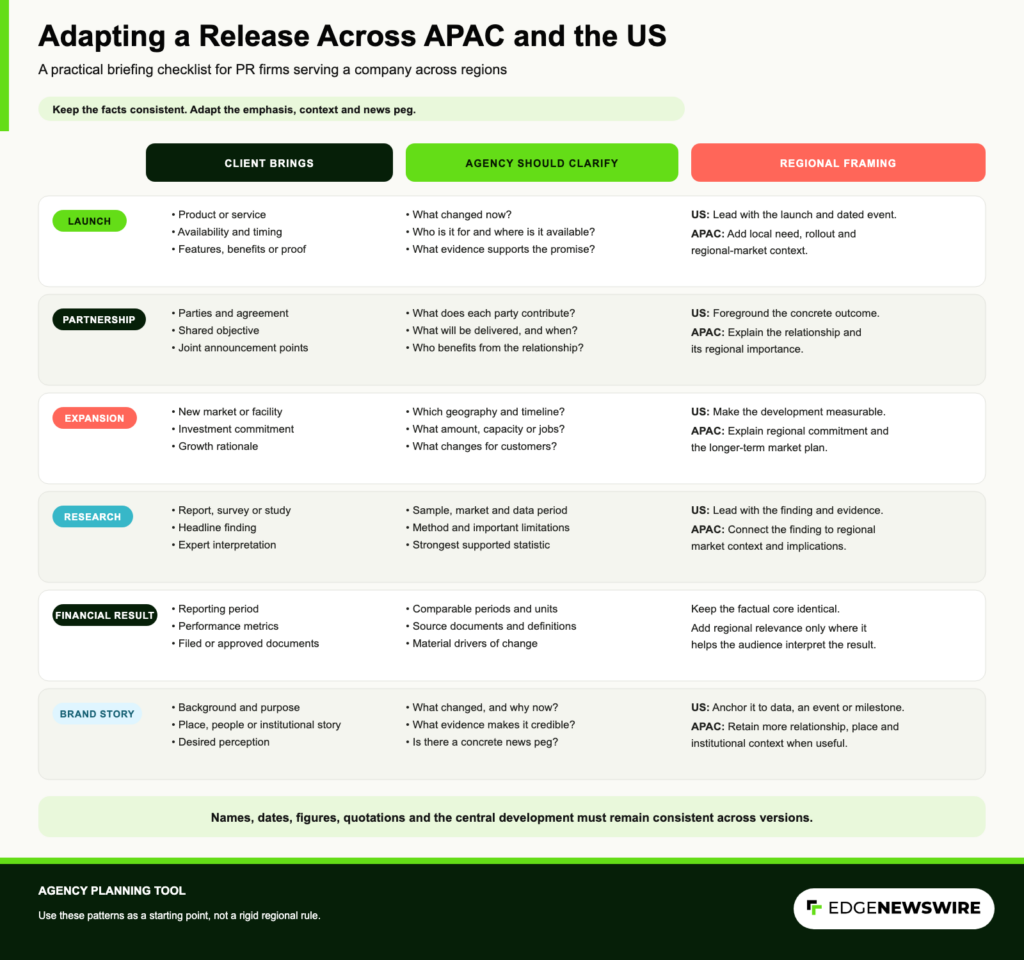
    Horizontal infographic showing four steps for press release success: Create content, target the audience, choose the channels, and optimize for media and search engines.

    That process starts before you ever hit “publish.”

    So before we talk about where to send your press release, let’s start with the first and most important step:

    Prepare Your Press Release Before You Distribute It

    Before you think about distribution, you need to make sure your press release itself is ready.

    A good press release should answer the basic questions right away: 

    • Who is involved
    • What happened
    • When it happened
    • Where it happened
    • Why it matters
    • How it happened

    If a reader cannot quickly find these answers, they will move on.

    #1 Use a Standard Press Release Format

    Press releases follow a standard format because journalists and editors rely on it to quickly understand the story. 

    When your release follows this structure, you make their job easier, and that increases the chance your news will be read or picked up.

    A typical press release includes:

    • Headline: A clear title that explains what the announcement is about.
    • Summary: One or two lines that give a quick overview of the news.
    • Dateline: The city and date, written as [City, State], [Month Day, Year].
    • Body: The main content. Start with the most important facts, then add details, context, and quotes.
    • Boilerplate: A short paragraph about your company.
    • Contact Information: Who the media should contact for more details.

    #2 Add Images and Visuals When They Support the Story

    Text explains the details, but visuals help people remember and understand your news faster. A relevant image or simple graphic can make your press release more attractive and more likely to be shared.

    Visuals work best when they:

    • Show the product, event, or people involved in the announcement
    • Explain numbers or results in a simple way
    • Reinforce your brand, such as with a logo

    That said, visuals should only be used when they add value. A random image that has nothing to do with the story can make your press release look less professional. 

    Make sure any images you include are clear, high quality, and properly sized for online use.

    #3 Make Your Press Release Easy to Read and Easy to Scan

    Most journalists and readers will scan your press release before they decide to read it properly. This means your structure and writing style matter a lot.

    Start with a strong opening paragraph that clearly explains what happened and why it matters. 

    After that, organize the rest of the content from most important to least important. Use short paragraphs and simple sentences so the text does not feel heavy or tiring to read.

    If your press release is longer, you can use subheadings to guide the reader through the main points. You can also highlight key information, but only when it is truly important. 

    The goal is to help the reader understand the story quickly, not to decorate the page.

    Avoid jargon and complicated language. A good rule of thumb is this: someone outside your industry should still be able to understand what you are announcing and why it matters.

    #4 Send Your Press Release at the Right Time

    Timing has a real impact on how many people see your news. Even a well-written press release can be ignored if it is sent at the wrong moment.

    In most cases, weekdays during business hours work better than weekends or late nights, because that is when journalists and editors are actually working. 

    But the best time also depends on your audience, your industry, and the type of announcement you are making.

    For example, a product launch, a financial update, and an event announcement may all perform better at different times. 

    The important thing is to think about timing as part of your strategy, not as an afterthought.

    Once your press release is ready, the next step is deciding where to send it.

    Choose the Right Channels to Distribute Your Press Release

    Distribution is not about sending your news everywhere. It is about sending it to the right places.

    #1 Send Your Press Release to the Right Media and Journalists

    Start by looking for publications and journalists who already cover topics related to your business. 

    If they have written about similar companies or similar announcements before, there is a much higher chance they will be interested in your story too.

    This usually means building a list of:

    • Industry websites and magazines
    • Business or regional news sites
    • Journalists who regularly cover your type of news

    When possible, personalize your outreach. A short message explaining why your news is relevant to that specific person often works better than a generic email sent to hundreds of contacts.

    Also, pay attention to submission guidelines. 

    <image of submission guidelines if you can find one>

    Many publications clearly explain how they want to receive press releases. Following these rules will not guarantee coverage, but ignoring them almost always hurts your chances.

    #2 Use Your Own Email List When It Makes Sense

    If you already have an email list of customers, partners, or subscribers, this can be a useful distribution channel. 

    These are people who already know your brand, so they are more likely to care about your updates.

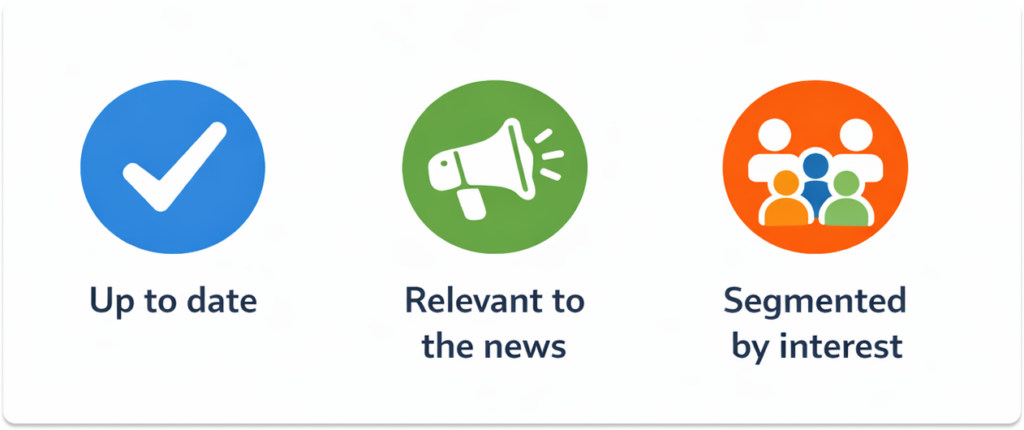
    Email works best when your list is:

    Infographic showing three email best practices.

    Instead of just sending the raw press release, you can add a short introduction explaining why this update matters. This makes the message feel more personal and more useful.

    #3 Use a Press Release Distribution Service

    Many brands use press release distribution services because they save time and extend reach. 

    A good service can place your news across many relevant outlets and handle the technical side of publishing for you.

    This is where a service like EdgeNewswire is often used. 

    The idea is not just to publish your press release on one site, but to distribute it across a network of media outlets where journalists, investors, customers, and search engines can actually find it.

    However, not all services offer the same quality, which is why choosing the right one matters.

    How to Avoid Low-Quality Press Release Distribution Services

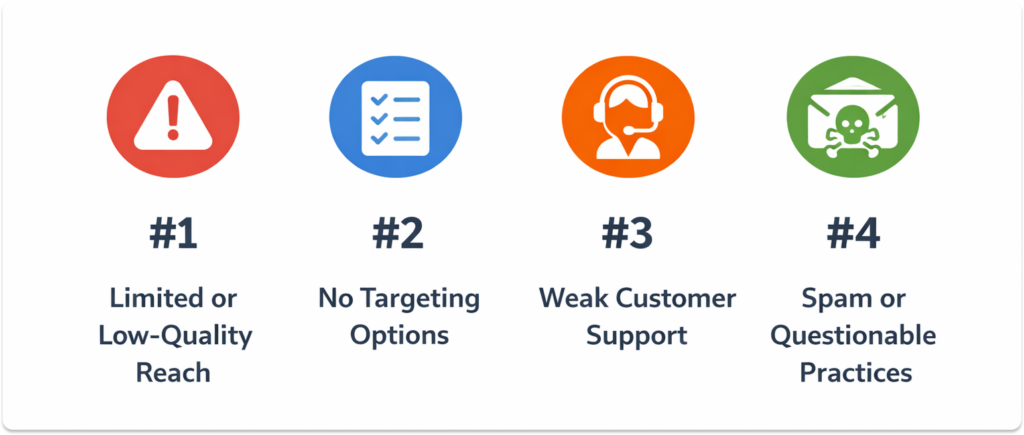
    Choosing the wrong distribution service can waste your budget and your effort. There are a few clear warning signs you should watch out for:

    Infographic listing four press release distribution red flags.

    #1 Limited or Low-Quality Reach

    Some low-cost or “free” services only publish your press release on their own small network of low-traffic sites. 

    These sites are rarely read by journalists or real customers, which means your news technically gets published but does not actually get seen.

    A reliable service should be transparent about where your press release can appear and what kind of outlets are included in their network.

    #2 No Targeting Options

    Good distribution is not about blasting your news everywhere. It is about reaching the right audience.

    If a service cannot help you target by industry, location, or type of publication, your press release will likely be shown to many people who are not interested in your news. 

    That usually leads to low engagement and poor results.

    #3 Weak Customer Support

    Press release distribution is not always a one-click process. You may have questions, need changes, or run into issues.

    A good provider should offer:

    • Clear and responsive support
    • Real people you can talk to
    • Guidance when something is unclear

    Checking reviews is often the easiest way to see how a company treats its customers.

    For instance, a client’s review posted on EdgeNewswire website:

    Testimonial quote about Edgenewswire with a five-star rating.

    #4 Spam or Questionable Practices

    Your press release should build your reputation, not risk it. Be careful of services that are vague about how they distribute content or that use spam-like methods.

    A trustworthy service should have clear editorial guidelines and explain how your news is handled and published.

    Avoiding low-quality distribution services puts you in a much better position. It means your press release has a real chance to appear on credible sites and reach the right audience.

    But, even with a good distribution partner, your press release should not be treated as a “set it and forget it” asset. 

    The brands that get the most value out of their announcements are the ones that continue to promote them after they go live.

    How to Promote Your Press Release After It Goes Live

    Promotion helps your news reach more people, get more visibility, and increase the chances of being picked up by media and search engines.

    #1 Share Your Press Release on Social Media

    Social media gives you a direct way to reach your audience. You should share your press release on your company’s profiles, but adjust the message for each platform.

    For example:

    • LinkedIn usually works better with a more professional tone
    • X works better with short and direct messages
    • Facebook can be more conversational

    But, do not just post and leave. Reply to comments, thank people who share it, and keep the conversation going. This helps your post stay visible for longer.

    #2 Use Paid Promotion When It Is Worth It

    Organic reach is useful, but paid promotion can extend your reach much further, especially for important announcements.

    Platforms like LinkedIn, Facebook, and X allow you to target specific audiences based on things like job roles, industries, and locations. 

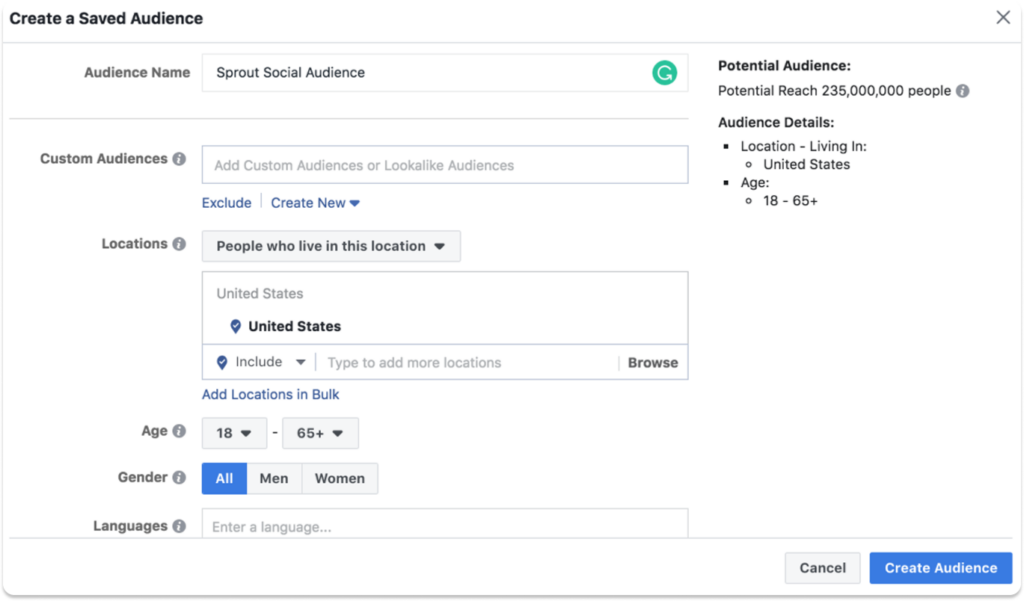
    Example of audience targeting in Facebook Ads Manager:

    An image of audience targeting in Facebook Ads Manager: settings to Create a Saved Audience
    Caption: Image credits to Sprout Social

    This can be very effective for B2B announcements, product launches, or major company updates.

    #3 Publish It on Your Own Website and Blog

    Your website is one of your most valuable channels. You should always add your press release to a News or Press section so visitors and journalists can find your latest updates.

    You can also turn the announcement into a blog post that explains the story in more detail. 

    This gives you more space to add context, answer common questions, and improve long-term visibility through search.

    Once you’re done promoting your press release, the next step is to look at how it actually performed. This is how you know what worked and what didn’t.

    How to Measure Press Release Performance

    If you do not measure results, you cannot improve your process.

    #1 Check Media Pickups

    Start by searching for your company name or your press release headline. Look at which sites published your news and which ones matter most to your audience. 

    A few good placements are usually more valuable than many low-quality ones.

    #2 Check Website Traffic

    If your press release links to your website, look at your analytics. 

    See how many visitors came from those articles and what they did after they arrived. This helps you understand whether your press release is driving real interest or just views.

    #3 Check Social Media Engagement

    Shares, comments, and mentions show whether people are reacting to your news. This is often a good signal of whether your message connects with your audience.

    #4 Compare With Your Previous Press Releases

    Do not look at each press release in isolation. 

    Compare the results with your past announcements. Over time, you will start to see patterns, such as which types of news perform better or which channels bring better results.

    Measuring performance shows you what worked and what did not. But many of these results are also shaped by where and how your press release is distributed. 

    That is why the choice of distribution partner matters.

    Why the Right Distribution Partner Matters

    A press release is only as effective as its distribution.

    You can write a clear and useful announcement, but if it does not reach the right audience, it will not create much impact. 

    This is why many brands work with a distribution partner that focuses on reach, relevance, and support.

    At EdgeNewswire, the goal is to help brands get their news in front of the right audience across a wide media network, while still keeping the process practical and supported by real people.

    Final Takeaway

    It is not just about what you say. It is about who hears it.

    If you want your press releases to bring real results, focus on preparation, smart distribution, and consistent promotion. 

    When you do that, press releases stop being just announcements and start becoming a real part of your marketing strategy. If you want help getting more out of your press releases, reach out to our team. We’re happy to walk you through the right distribution and promotion approach for your goals. Contact us today!

    Frequently Asked Questions (FAQs)

    Q: What should I include in a press release before distributing it?

    A: Cover the basics (who, what, when, where, why), follow a standard format, and keep it clear, scannable, and supported by specific details.

    Q: What is the best time to send a press release?

    A: Weekdays during business hours work best, but timing should match your audience, industry, and type of announcement.

    Q: How do I choose between sending directly to journalists versus using a distribution service?

    A: Use direct outreach for targeted stories and distribution services for broader reach. Many brands use both.

    Q: How can I tell if a press release distribution service is low quality?

    A: Look for unclear reach, no targeting, weak support, or spammy practices. Good services are transparent and reliable.

    Q: How do I know if my press release actually worked?

    A: Track media coverage, website traffic, social engagement, and inquiries, and compare results over time.

  • Press Release Marketing Strategy (Format and Tips Included!)

    Press Release Marketing Strategy (Format and Tips Included!)

    Most businesses spend time and budget on ads, social media, email campaigns, and content marketing. All of that  But the are beneficial, and important for a business. 

    But there is one tool that often gets misunderstood or underestimated, the press release.

    Some people think press releases are outdated. Others see them only as something for big corporations. 

    In reality, press releases are still one of the most practical ways to communicate important news, build credibility, and support long-term brand visibility.

    A well-planned press release does more than announce something. It puts your brand into public conversations, gives journalists a reliable source of information, and creates content that can live across search engines, media sites, and social platforms.

    If you care about trust, reach, and long-term brand presence, press releases should not be an afterthought. They should be part of your marketing system.

    What is a Press Release?

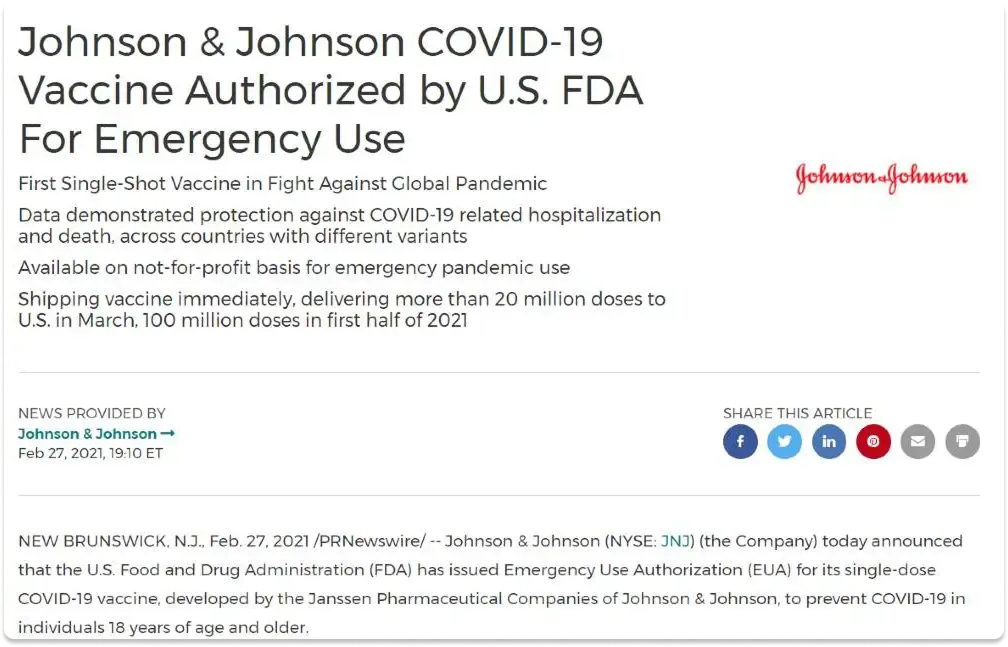
    At its core, a press release is a formal announcement shared with the media and the public. Example of press release:

    Screenshot of a Johnson & Johnson press release announcing FDA emergency use authorization for its COVID-19 vaccine.

    It is used to communicate news such as:

    • Product or service launches
    • Company milestones
    • Partnerships or collaborations
    • Rebranding or positioning changes
    • Events, awards, or major updates

    But, press release is not an advertisement.

    A press release is built around information instead of promotion. Its job is to explain what happened, why it matters, and who is involved, in a clear and factual way. 

    When press release is written in an effective way, it gives journalists and readers everything they need to understand the story without sounding like a sales copy.

    Benefits of Using Press Releases for a Business

    Press releases support several important marketing goals at the same time.

    #1 Reach New Audience

    Your website, social media, and email list mostly reach people who already know you or have chosen to follow you.

    Press releases help you reach new audiences through media sites, news platforms, and search engines. When your story is published on multiple outlets, your brand shows up in places you could not easily access on your own.

    For example, when you use a press release distribution service like EdgeNewswire, your announcement can be picked up by established media outlets such as Business Insider, AP News, and USA Today. 

    These platforms have massive audiences that are far larger than most company websites or social accounts, which means your story gets in front of readers who would never have found you otherwise.

    This is especially valuable for businesses that want to grow beyond their existing customer base or enter new markets.

    #2 Building Trust Through Third-Party Visibility

    Being mentioned on well-known or respected websites changes how people see your brand.

    When potential customers see your company featured on recognizable platforms, it adds a layer of credibility that self-published content cannot easily create. It signals that your business is real, active, and worth paying attention to.

    For many people, this kind of social proof plays a big role in buying decisions.

    #3 Delivering the Right Message to the Right Audience

    Press releases allow you to shape how your news is presented.

    Instead of relying on short social posts or fragmented updates, you can explain your story in a structured way. This is especially useful when your news is technical, strategic, or important to specific groups such as investors, partners, or industry professionals.

    With the right distribution, your message can appear in front of people who actually care about that type of news.

    #4 Supporting Lead Generation and Demand Creation

    A good press release attracts interest from people who are already looking for solutions, and ma like yours.

    For example, a company announcing a new software tool can catch the attention of businesses actively searching for that type of product. Over time, this kind of visibility can turn into inquiries, sign-ups, or partnerships.

    #5 Strengthening Long-Term Online Visibility

    Press releases live online.

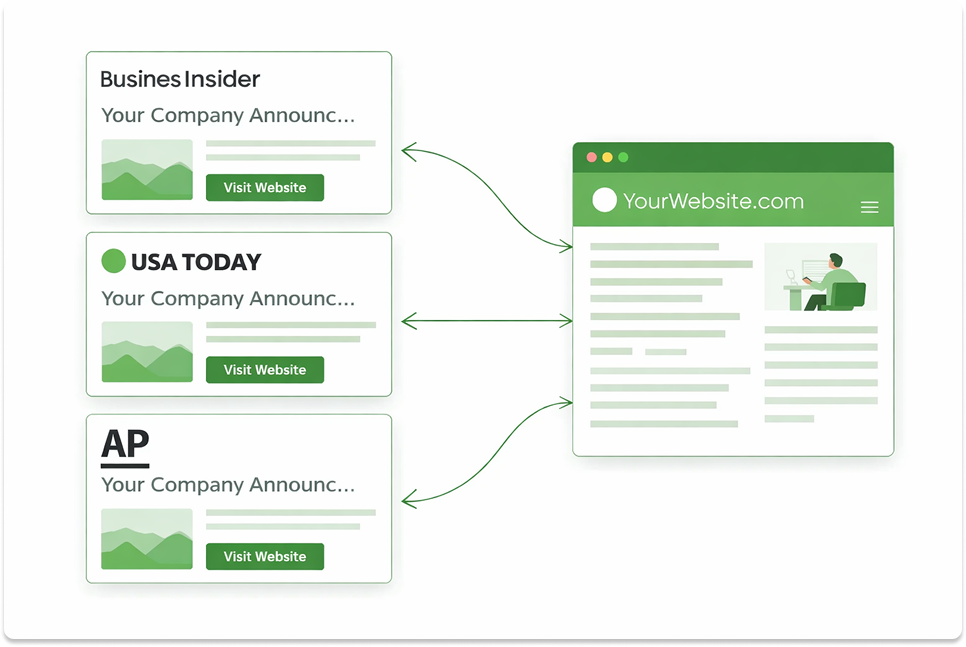
    When they are published on media sites, they often include links back to your website. These links can drive referral traffic and also support your broader search visibility.

    Graphic showing media articles linking to a company website.

    More importantly, press releases create a trail of public information about your brand. This helps shape what people and even AI tools find when they look up your company.

    #6 Reinforcing Your Brand Positioning

    Consistency matters in branding.

    When you regularly share updates that align with your values, mission, or expertise, you reinforce how people perceive your company. A business that frequently publishes news about sustainability, innovation, or community impact becomes associated with those themes over time.

    Press releases help you control and repeat those signals in a structured way.

    How to Build an Effective Press Release Strategy

    Press releases work best when they are part of a plan, not random one-off announcements.

    #1 Start With a Clear Audience Focus

    Before writing anything, be clear about who the news is for.

    Ask questions like:

    • Are you targeting customers, investors, partners, or media professionals?
    • What problems or interests does this group have?
    • Where do they usually get information?

    Creating simple audience profiles helps you decide what angle to take, what details to highlight, and where to distribute your release.

    #2 Decide on Timing and Frequency

    For major announcements, it often makes sense to publish one or two weeks before a launch or event. This gives journalists time to review the story and plan coverage.

    As for frequency, more is not always better. 

    Press releases should be used for real news, not small internal updates. A few strong, well-timed releases usually perform better than many weak ones.

    Also pay attention to the day and time. Midweek and business hours tend to work better for most industries, since that is when editors and writers are actively working.

    #3 Connect Press Releases With Other Marketing Channels

    Press releases should not live in isolation. 

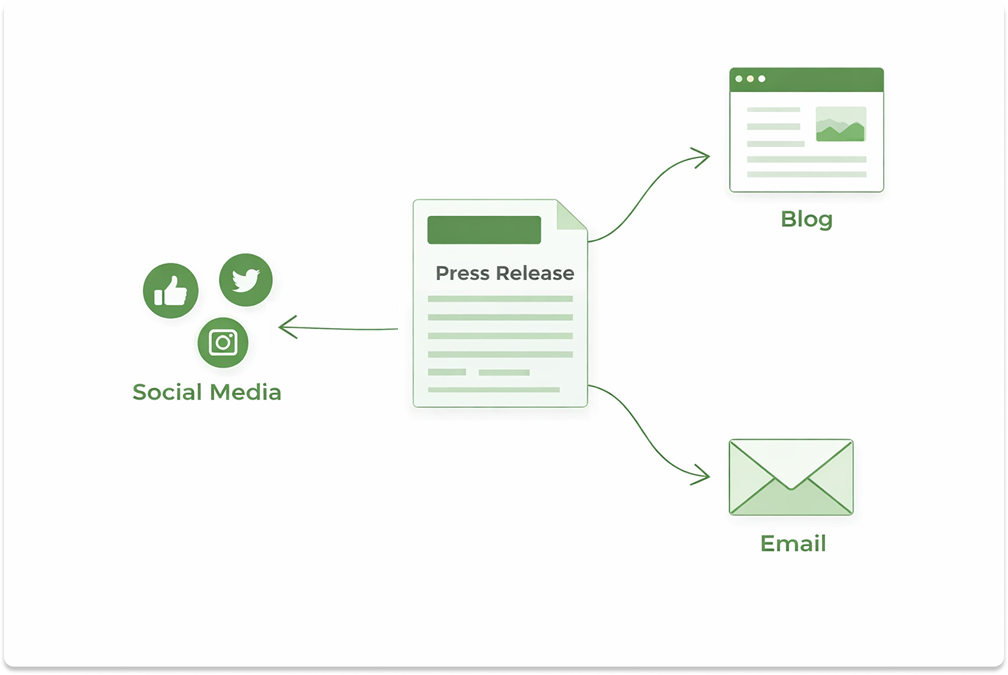
    When you are launching something new, you can tease it on social media before the release, follow up with a blog post that goes deeper into the topic, and send an email to your list with extra context or a related offer. 

    Diagram showing a press release feeding into social media, blog, and email channels.

    This creates a connected story across channels, so each piece supports the others and increases the overall impact of your campaign.

    When to Use a Press Release

    Not every update deserves a press release.

    Press releases work best for:

    • Major product or service launches
    • Strategic partnerships
    • Funding or business milestones
    • Industry recognition or awards
    • Important company changes

    They are usually not the right tool for:

    • Small internal changes
    • Routine updates with no public impact
    • Minor feature tweaks
    • General marketing announcements with no real news value

    Being selective helps you maintain credibility with media outlets and keeps your announcements meaningful.

    Other than that, the way you write your press releases is also important. 

    Just as important, the way you write your press releases matters because editors, readers, and search platforms all judge your story based on clarity, relevance, and news value. 

    A well-written release makes it easier for your announcement to be understood, picked up, and trusted, while a poorly written one is likely to be ignored even if the news itself is solid.

    How to Write Press Releases People Want to Read

    A good press release follows a structure that makes it easy to understand and easy to evaluate.

    a) Use a Clear, Familiar Structure

    Most editors expect to see:

    ✅ A clear headline that states the news

    ✅ A short summary that explains why it matters

    ✅ A dateline with location and date

    ✅ A body that covers who, what, when, where, why, and how

    ✅ A short company description at the end

    ✅ Contact details for follow-up

    This structure will make your story easy to scan and easy to verify.

    b) Write Headlines That Respect the Reader’s Time

    Your headline should be specific and factual.

    Instead of vague promises, focus on what actually happened. A good headline helps the reader immediately understand whether the story is relevant to them.

    c) Focus on Benefits, Not Just Features

    Do not just list what you built or changed. Explain why it matters.

    If your update improves efficiency, accessibility, cost, or experience, make that clear. This turns your announcement from a simple update into a story with real-world impact.

    d) Always Include a Clear Next Step

    Every press release should guide the reader somewhere.

    That could be:

    • Visiting your website
    • Registering for an event
    • Contacting your team
    • Downloading a resource

    A clear call to action helps turn attention into engagement.

    How to Distribute a Press Release to the Right Audience

    Writing is only half the job. Distribution decides who actually sees your story.

    #1 Optimize for Search Visibility

    Use keywords your audience is likely to search for, but keep the language natural. 

    Tools like Google Trends, Ahrefs, or Semrush can help you see what people are actually searching for and how competitive those terms are, while Google Search Console can show you which queries already bring traffic to your site. 

    Illustration of Google Trends, Ahrefs, and Semrush dashboards used for keyword and SEO research.

    A well-optimized press release can then continue to appear in search results long after it is published, bringing in steady visibility instead of just a short spike of attention.

    #2 Use Visuals When Possible

    Images, charts, or videos make your story easier to understand and more attractive to publishers. Many outlets prefer having visuals ready instead of requesting them later.

    #3 Share Across Your Own Channels

    Once your press release is live, share it on your social platforms, website, and email newsletters. This extends its reach and reinforces the message across touchpoints.

    #4 Consider Using Distribution Services

    Distribution platforms help place your press release across multiple media outlets at once.

    This saves time and increases the chance that your story reaches relevant publishers, especially if you are targeting specific industries or regions.

    How to Measure Whether Your Press Releases Are Working or Not

    Press releases should support real business goals, so measurement matters.

    a) Track Media Coverage

    Look at which sites published your story and how often it was picked up. This shows how newsworthy and relevant your announcement was.

    b) Monitor Website Traffic and Search Visibility

    Check whether people are visiting your site from those articles and whether your brand or keywords are appearing more often in search results.

    c) Measure Leads and Conversions

    If your press release includes a call to action, track how many people follow it. This helps you understand the business impact, not just the visibility.

    d) Collect Feedback and Improve

    Pay attention to what journalists, partners, and readers say. Over time, this feedback helps you refine your topics, angles, and writing style.

    Final Takeaway

    Press releases are not a relic of old-school PR. 

    They are still one of the most reliable ways to share important news, build credibility, and strengthen your brand’s public presence when they are used with intention.

    The key is not to treat them as one-off announcements or marketing fillers. A strong press release strategy starts with understanding your audience, choosing news that actually matters, writing with clarity, and distributing your story where it has the best chance to be seen. 

    When those pieces come together, press releases stop being just “news updates” and start becoming a consistent driver of visibility, trust, and long-term brand authority.

    If you approach press releases as part of your wider marketing system rather than a separate tactic, they become far more effective. Over time, each well-planned release adds another credible signal about your business, your expertise, and your direction. 

    That cumulative effect is what makes press releases such a valuable asset in a modern marketing strategy.

    Frequently Asked Questions (FAQs)

    Q: Are press releases still useful for small businesses?

    A: Yes. Small businesses often benefit even more because press releases help build credibility and visibility faster than relying only on social media or ads.

    Q: How long should a press release be?

    A: Most effective press releases are between 400 and 800 words. The goal is to be complete but not overwhelming.

    Q: Can a press release help with AI search visibility?

    A: Yes. Press releases published on trusted sites create authoritative sources that AI tools may reference when summarizing companies, products, or topics.

    Q: Should press releases be written in first person?

    A: No. Press releases should be written in a neutral, third-person tone to match journalistic standards.

    Q: Is it better to write press releases in-house or outsource them?

    A: It depends on your team’s experience. In-house works if you understand media writing well. Outsourcing can help if you want speed, consistency, or broader distribution support.

  • How to Submit and Distribute Your Press Release?

    How to Submit and Distribute Your Press Release?

    After writing a press release, most businesses get stuck on one question: how do you actually get it in front of the right people? 

    Many try emailing a few journalists and hope for the best. Sometimes it works, but most of the time it gets buried in crowded inboxes.

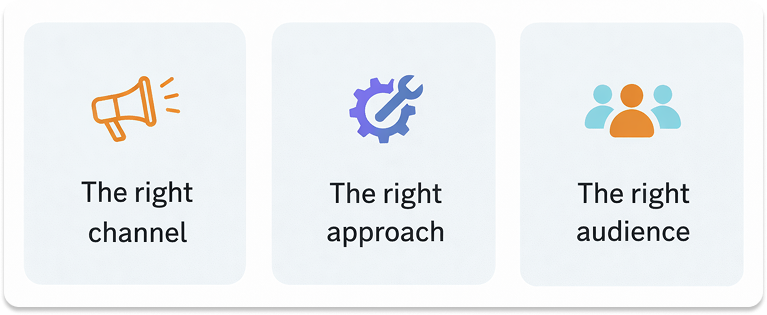
    Sending a press release isn’t about blasting it everywhere. It’s about getting three fundamentals right:

    Illustration showing three key elements for effective communication

    Does This News Deserve a Press Release?

    Before talking about where to send your press release, it’s worth pausing for a moment and asking a simple question. Is this actually news?

    Press releases work best when something meaningful has happened. For instance:

    • New product or service launch
    • Funding round
    • Partnership or collaboration
    • New market
    • Major hire
    • Company milestone

    These are things that make sense in a news format because they change something about your business or your market.

    What usually doesn’t work is treating a press release like an ad. Small updates, routine promotions, or “we’re great” announcements rarely give editors or readers a reason to care. 

    If the story only matters to your own team, it probably needs a different format such as social media posting.

    So, once you’re confident you have something newsworthy, the next decision is how to get it out into the world.

    How to Submit a Press Release?

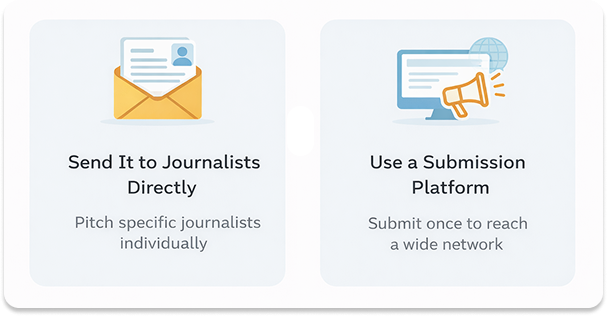
    There are only two common ways businesses get a press release out:

    Illustration comparing two press release distribution methods

    1. Sending It To Journalists Directly

    This is the hands-on route, and it works best when your story is very specific and you already have a clear idea of who covers your industry. 

    Instead of sending your news out widely, you research the right writers, look at what they’ve published before, and understand the kind of stories they usually work on. 

    Then you craft a short, personal pitch that explains why your announcement fits their beat and why it might matter to their readers.

    When this approach works, it can lead to highly targeted coverage from exactly the outlets you want to be on. The story is more likely to land in the hands of someone who already cares about your topic, which often means better context and better placement.

    The trade-off is the workload and the uncertainty that comes with it. 

    Building and maintaining media lists takes time. Same goes to writing individual pitches and following up.

    And even after all that effort, the outcome still depends on whether the right person opens your email at the right moment and decides your story is worth pursuing.

    2. Using A Press Release Submission Platform

    This is the scalable route. Instead of spending your time chasing individual inboxes, you submit your press release once and let the platform handle the distribution for you. 

    Your announcement gets placed where editors, journalists, and readers already go to look for news. Platforms like EdgeNewswire handle the delivery side while giving you visibility into where your release appears and how far it travels.

    Rather than guessing who might see your story, you get a clearer picture of where it shows up and how it performs.

    But…

    Which One Should You Use?

    Neither option is a magic switch for publicity, and both can work in the right situation. What they really change is how you balance effort, control, and reach.

    Many businesses end up using both at different times. A highly targeted story might be pitched directly to a few key journalists, while bigger announcements are pushed through a distribution platform to make sure they reach as many relevant places as possible.

    The right choice depends on your goals, your resources, and how far you want your story to travel this time around.

    If you decide to take the hands-on route, here’s what the process looks like:

    How To Pitch Journalists Directly?

    Step 1: Find the right journalists

    Start with people who already cover your topic. 

    Don’t rely on titles like “editor” or “reporter.” Look at recent articles and see who consistently writes about your industry, your customers, or your type of announcement.

    Step 2: Check fit before you pitch

    Take two minutes to confirm you’re not forcing it. 

    If they only write about policy and you’re pitching a product launch, it’s a mismatch. A quick scan of their last few stories usually tells you what they actually care about.

    Step 3: Write a pitch that respects their time

    Keep it short. Make the news obvious in the first line. The goal is not to tell the whole story. It’s to make the announcement clear enough that they want to read the release.

    Step 4: Use a specific subject line

    Avoid generic subject lines like “Press Release.” Put the actual news in the subject line so they can understand the point at a glance.

    Step 5: Make it easy to read immediately

    Paste the press release into the email body. Attachments and extra clicks are where pitches go to die. If you have images or extra materials, include a link instead of attaching large files.

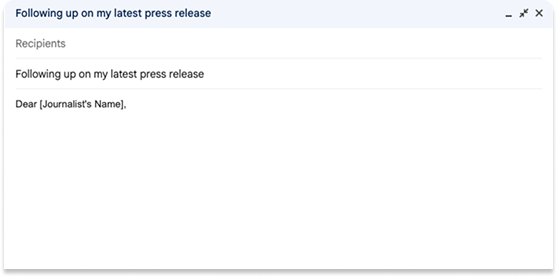
    An image of a follow up email draft to a journalist

    Step 6: Follow up

    A single polite follow-up is fine. Chasing isn’t. If there’s no response after one reminder, it’s usually better to focus on other outlets or try a different angle next time.

    Direct outreach can work especially well in niche industries, but it works best when it’s treated as relationship-building, not mass outreach.

    If that sounds like a lot of work, it’s because it is. That’s also why many companies choose a more scalable option: using a press release distribution platform.

    How Press Release Distribution Platforms Actually Work?

    Press release distribution is designed to take your announcement and place it across a network of media sites and publishing partners, without you having to manage dozens of individual pitches.

    Step 1: You submit your press release and choose your reach

    Upload your press release and select the distribution package that matches how wide you want your news to go.

    Step 2: The platform distributes your news across its network

    Once submitted, the platform sends your content out to its network of media sites, aggregators, and publishing partners. 

    Your release is placed in environments where editors, journalists, and readers already go to look for information.

    Step 3: Different outlets use your release in different ways

    Some sites publish the release directly. 

    Some journalists discover it through these systems and use it as a source for their own stories. Some ignore it. That mix is normal and part of how media distribution works.

    Step 4: Your news becomes easier to find and reference

    Instead of relying on one email landing in the right inbox, your announcement is now visible in places where it can be found, indexed, and referenced over time.

    Step 5: You track where it appears and how far it travels

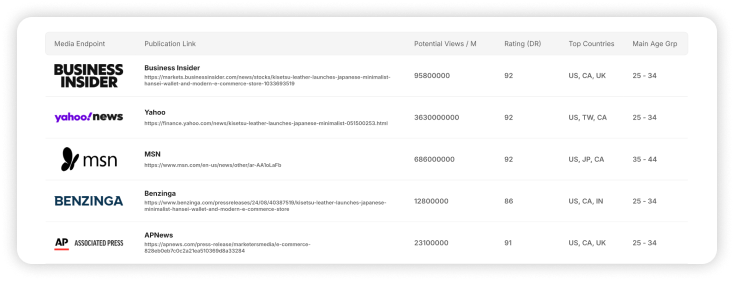
    With services like Edgenewswire, you also get reporting that shows where your release appears. This gives you a clearer picture of your reach and helps you understand what’s working.

    Table showing press release distribution across major media outlets

    Step 6: You turn PR into a repeatable process

    Rather than treating each press release like a one-off gamble, this approach makes distribution more predictable and measurable. 

    Over time, you can refine your stories, your timing, and your strategy based on real results.

    How To Write A Press Release Editors Will Use

    No matter how you send your press release, the writing still does most of the work. A common mistake is treating a press release like a marketing copy. 

    Editors and journalists are not looking for slogans. They are looking for clear, useful information.

    #1 Start with the actual news

    The opening paragraph should explain what happened, who was involved, when and where it happened, and why it matters. 

    Many people will only read this far. If the point isn’t clear here, it probably won’t get clearer later.

    #2 Write a concise headline

    A good headline tells the reader what happened in plain language, without trying to be clever or dramatic. It shouldn’t tease or hide the point of the story. 

    Someone should be able to read your headline and immediately understand what the announcement is about. 

    If they have to click or read the first paragraph just to figure out what happened, the headline isn’t doing its job. 

    The goal is simple: make the news obvious at a glance so an editor can decide, in seconds, whether it’s relevant to their audience.

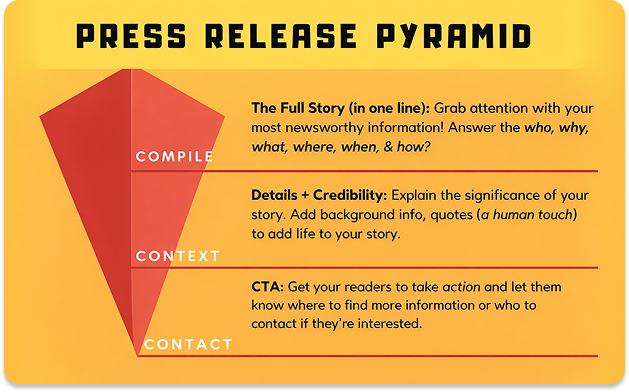
    #3 Use the inverted pyramid approach

    Structure your press release using the inverted pyramid approach: lead with the most important facts, then follow with supporting details and background. 

    An infographic by MarketersMEDIA Newswire showing how to write a press release

    Caption: Image credits to MarketersMEDIA Newswire

    #4 Use quotes that add context

    Quotes should help explain the decision, the impact, or the thinking behind the announcement. They give your story a human voice and help editors understand not just what happened, but why it happened. 

    If a quote is only there to praise the company or repeat what the headline already says, it’s not doing much work. A good quote adds perspective, clarifies intent, or highlights what changes because of this announcement.

    #5 Back it up with real details

    Specific numbers, timelines, and real-world examples make your announcement more credible and more useful to someone who might want to turn it into a story. 

    Details give editors something concrete to work with and help readers understand the real scope of what you’re announcing. 

    Without them, a press release can feel vague or generic, which makes it easier to ignore and harder to report on.

    #6 Choose a good timing to send

    Even good news can get buried if it goes out on the wrong day or at the wrong time. Editors plan their coverage ahead, so sending your press release earlier in the day gives it a better chance of being seen and considered. 

    It also helps to avoid days when major news is likely to dominate attention. Timing won’t save a weak story, but good timing can make a strong one much harder to miss.

    How To Tell If Your Press Release Is Doing Its Job?

    Press releases don’t all succeed in the same way, so it helps to look at a few signals together instead of relying on just one number.

    1. Media coverage and mentions

    One of the clearest signs is seeing media sites publish your announcement or use it as a source in their own stories. 

    This shows your news is reaching places where journalists and editors actually work.

    2. Website traffic

    Another useful signal is what happens to your site after the release goes out. If you mentioned a specific page, product, or announcement, check whether visits to that page increase. 

    A spike doesn’t always mean “success,” but it does show your story is driving attention.

    3. Social media activity

    Sometimes the response shows up in conversations instead of clicks. 

    Shares, mentions, or discussions about your announcement can tell you whether the story resonates beyond just media sites.

    4. Inquiries and leads

    In some cases, the real impact comes a few days later in the form of emails, demo requests, or business inquiries. 

    These are often the most valuable signals, even if they’re not immediate.

    None of these on their own tells the full story. But when you look at them together, they give you a much clearer picture of whether your message is getting through and where it’s having an effect.

    Final Takeaway

    You can absolutely submit your press releases manually. But it also takes time, ongoing research, and a lot of follow-up. 

    As soon as you want to publish more than the occasional announcement, the process becomes hard to maintain.

    This is exactly what EdgeNewswire does. 

    Submit your press release once, and we’ll distribute it  across our media network where editors, journalists, and readers already look for news, and you don’t have to rebuild the process from scratch every time you have something to announce.

    Ready to get your next announcement out there? Submit your press release here and let us handle the distribution.

    Frequently Asked Questions (FAQs)

    Q: How do I know if my news is worth a press release?

    A: If it meaningfully changes something about your business or market like a launch, funding, partnership, or milestone, it’s worth it. If it’s only internal, stick to social media.

    Q: Should I send my press release directly to journalists or use a distribution platform?

    A: Use both. Direct outreach works for targeted stories. Distribution platforms are better for broader reach.

    Q: What’s the biggest mistake people make when writing a press release?

    A: Writing it like marketing copy. Keep it factual, lead with the news, and support it with real details.

    Q: How many times should I follow up after pitching a journalist?

    A: Once. More than that usually hurts your chances.

    Q: How do I measure whether my press releas

    A: Look at coverage, traffic spikes, social activity, and incoming leads together.

  • Best Time to Send a Press Release: Day, Hour & Timing Factors

    Best Time to Send a Press Release: Day, Hour & Timing Factors

    A great press release can fail just because you send it at the wrong moment.

    You can have a strong headline, a clear story, and real news to share, yet still get little response if your release lands when inboxes are crowded or editors have already mentally moved on from work for the day.

    For instance, you send your press release late Friday afternoon. Normally, editors are wrapping up their week, planning their weekends, or clearing their inboxes as quickly as possible. 

    Your carefully written announcement is far more likely to be ignored than reviewed. This is why timing is part of the strategy in PR.

    Even in a world where news travels instantly and people check their phones all the time, attention still follows patterns. 

    Editors have workflows. Journalists have deadlines. Audiences have habits. If your press release does not fit into those rhythms, it struggles to compete, no matter how good the content is.

    What Is the Best Day to Send a Press Release?

    If you look across most PR and media workflows, a clear pattern shows up. Midweek consistently performs better than the edges of the week.

    1. Why Tuesday, Wednesday, and Thursday Work Best

    Tuesday, Wednesday, and Thursday are usually the strongest days to distribute a press release.

    By Tuesday, the Monday inbox rush has settled. Editors have cleared the backlog, meetings are done, and people are back in a normal working rhythm. Your release has a better chance of being opened, read, and considered.

    Wednesday often performs just as well. It sits right in the middle of the workweek, when teams are focused and actively working on upcoming stories.

    Thursday can still work, especially for news that is timely or needs quick turnaround coverage. It is close enough to the end of the week that some editors are planning content ahead, but not so late that attention has completely dropped off.

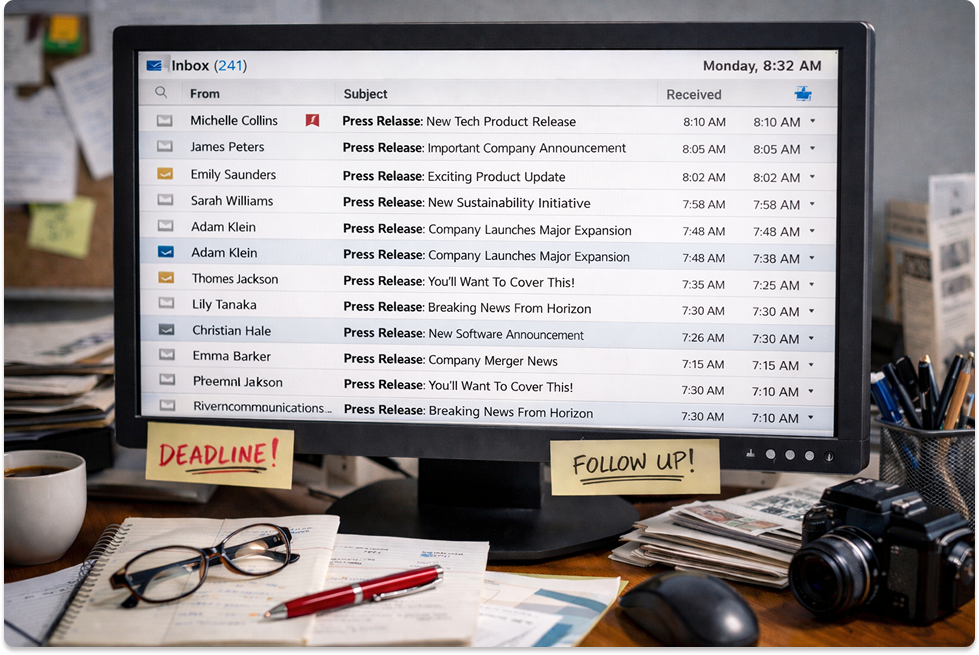
    2. Why Monday Is Risky

    Mondays are crowded.

    Over the weekend, inboxes pile up. On Monday morning, editors and journalists are sorting through a large volume of emails, pitches, and internal messages. Many non-urgent items get skimmed or deleted just to reduce the backlog.

    Editor’s inbox on a Monday morning filled with press release emails.

    If your press release lands in that pile, it may never get a fair look, even if it is genuinely relevant.

    3. Why Friday and Weekends Are Usually a Bad Idea

    By Friday, attention starts to shift. 

    People focus on finishing tasks, closing loops, and getting out the door. New pitches and announcements are often postponed until next week or ignored altogether.

    Weekends are even worse. 

    Many newsrooms run with smaller teams, and most business communication slows down. Unless your news is time-sensitive or tied to a weekend event, sending a press release on Saturday or Sunday usually means it will be buried by Monday’s wave of emails.

    If you want a safe default, aim for Tuesday, Wednesday, or Thursday. But, you need to be careful of the timing when you send the press release as well.

    When Is the Best Time to Send a Press Release?

    There is no single perfect time that works for every industry or every audience, but there are clear patterns you can use as a starting point.

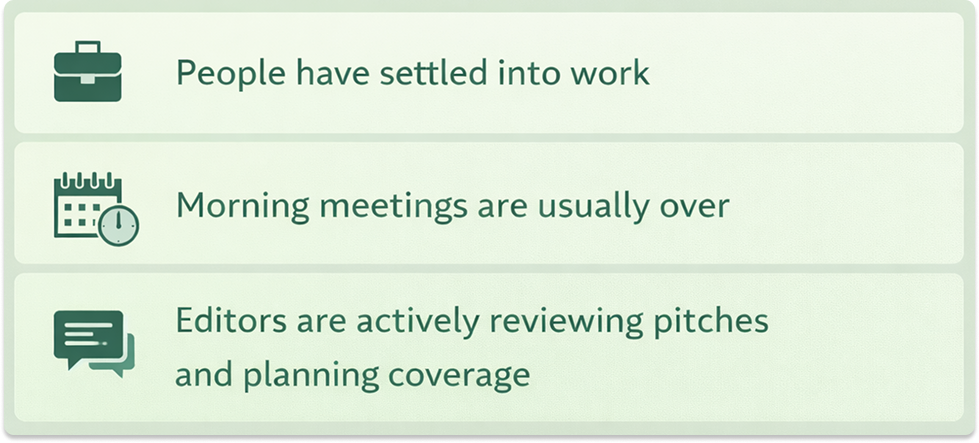
    1. The Late Morning to Early Afternoon Window

    For many industries, the strongest window is between around 10:00 AM and 2:00 PM.

    By this point in the day:

    Green infographic showing the best time to send a press release with three key reasons.

    Sending too early, such as before 8:00 AM, often means your email sits at the bottom of the inbox under newer messages. Sending too late in the afternoon means it competes with end-of-day wrap-ups and gets pushed to tomorrow, or forgotten.

    2. The Case for Avoiding “On the Hour” Sends

    There is another small but useful tactic to consider.

    Many PR teams schedule releases exactly on the hour or half-hour, such as 10:00 AM or 12:00 PM. This creates predictable spikes in incoming emails and wire releases.

    If you send your press release at a slightly unusual time, such as 11:17 AM or 1:42 PM, you may avoid the peak congestion. Your message does not compete with dozens of others hitting inboxes at the same minute.

    This does not guarantee attention, but it can improve your odds in a very crowded environment.

    Why “Perfect Timing” Depends on Your Audience and Industry?

    General guidelines are helpful, but they are not universal rules. The best timing for your press release depends on:

    • Who you are targeting
    • What industry you are in
    • What kind of news you are sharing
    • Which regions or time zones important for you

    For example, you run a software company that sells tools to other businesses in the US. Journalists and editors there usually start checking emails in the late morning. Sending your press release around mid-morning US time gives it a better chance to be seen.

    Now imagine you are launching a new consumer product in Europe. Editors there are in a different time zone and follow a different daily routine. If you send the release at the same time as the US one, it might arrive late in their day and get missed.

    This is why testing matters.

    If you send multiple press releases over time, track what gets opened, picked up, or covered. You may find that your audience responds better on certain days or at certain hours that do not match general advice.

    Data from your own campaigns is always more valuable than generic benchmarks.

    Five Timing Factors Most People Ignore

    Day and time are only part of the story. Real-world timing decisions are influenced by several other factors:

    1. The News Cycle

    Big events, holidays, and major industry moments can drown out smaller announcements.

    From late in the year onward, major holidays, sales events, and conferences often dominate coverage. 

    Take a major event announcement like the Esports World Cup. It draws massive media attention. If your release is unrelated or just a routine update, it is far more likely to get buried and never make it into coverage.

    Fireworks over the Esports World Cup opening ceremony with a large crowd and stage.

    On the other hand, quieter periods in the news cycle can work in your favor. 

    With less competition, your story has more room to stand out. Tools like Google Trends or social listening platforms can help you spot when attention is high or low around certain topics.

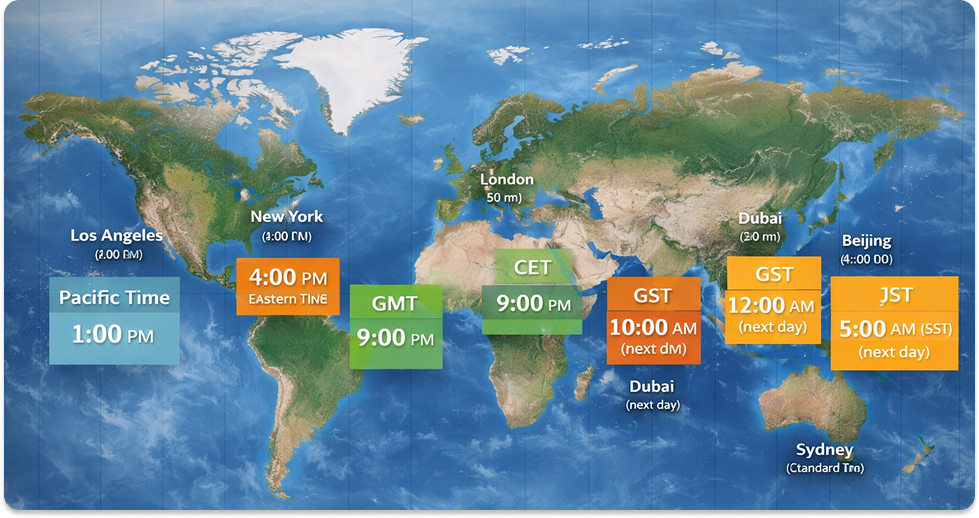
    2. Time Zones and Local Work Habits

    If you are targeting multiple regions, time zones matter more than you might expect.

    World map showing major cities and their time zones.
    Image is for illustration purposes only.

    Sending a press release at 9:00 AM in the US could mean it arrives in Europe late in the afternoon, when many people are already wrapping up their day. 

    The same timing could be completely wrong for Asia or the Middle East.

    Local customs also play a role. In some regions, certain days are weekends. In others, workdays may have long midday breaks. If you ignore these patterns, your release can land at exactly the wrong moment.

    3. Industry Rules and Compliance Windows

    Some sectors have strict rules about when announcements can be made.

    Public companies often have quiet periods around earnings. Financial, healthcare, and legal industries may have additional constraints around what can be published and when. 

    Political announcements also need to consider regulatory and ethical boundaries.

    Timing is not just a marketing decision in these cases. It is a compliance issue. Always make sure your schedule fits your industry’s rules.

    4. Your Relationship With Editors and Journalists

    Strong relationships can change how timing works.

    If editors know you consistently send relevant, accurate, and well-prepared news, they are more likely to pay attention, even during busy periods. Some may even tell you when they prefer to receive pitches or when their calendars are less crowded.

    A good relationship can give you more flexibility and better feedback on when to send.

    5. The Lead Time Your Story Needs

    Not every story is meant for immediate publication.

    Event announcements, product launches, or major reports often benefit from advance notice. Giving journalists time to plan, research, and prepare coverage increases the chance of meaningful exposure.

    As a general guideline, sending a press release at least a week in advance for events or scheduled launches is a smart move. For larger stories, even more lead time can help.

    How to Plan the Timing of Your Press Release

    One of the most common mistakes in PR is treating distribution as a last-minute task. Good timing starts with planning, not just picking a day on the calendar.

    If you know an announcement is coming, build your timeline backward:

    • When does the news become public?
    • When do you want coverage to appear?
    • How much time do editors need to review and prepare?

    Scheduling your press release in advance removes stress and gives you room to adjust if something changes. It also lets you choose a time based on strategy, not convenience.

    If you are using a distribution service like EdgeNewswire, or working with a PR team, planning ahead also makes it easier to get advice on the best timing for your specific industry or region.

    Final Takeaway

    There is no magic hour or perfect day that guarantees success. But there are smart defaults, clear patterns, and practical strategies that can dramatically improve your odds.

    Midweek usually beats Monday and Friday. Late morning to early afternoon usually beats very early or very late sends. Avoiding peak congestion times can help. Paying attention to news cycles, time zones, industry rules, and lead times makes your timing decisions far more effective.

    Most importantly, remember that timing only amplifies what is already there. A well-timed press release still needs a clear story, real news, and strong writing to work.

    If you combine good content with thoughtful timing, you give your announcement the best possible chance to be seen, read, and acted on. And in PR, that combination is what turns a simple send button into real results.

    Frequently Asked Questions (FAQs)

    Q: Should I resend a press release if it gets no response?

    A: Yes, but carefully. A polite follow-up or a resend at a better time can help, especially if the first send landed during a busy period. The key is to adjust the timing or angle, not just hit send again with the same approach.

    Q: Is it better to send a press release on the same day as my announcement goes live?

    A: Not always. For bigger stories, sending it earlier under embargo or with advance notice can give journalists more time to prepare proper coverage. For smaller or time-sensitive news, same-day distribution can make sense.

    Q: Do embargoes affect when you should send a press release?

    A: Yes. If you are offering an embargoed story, you need to send it early enough for journalists to prepare, but not so early that it gets forgotten. Embargo timing should match the complexity of the story and the outlet’s workflow.

    Q: Should I coordinate press release timing with social media or email campaigns?

    A: Ideally, yes. Aligning your press release with your other channels can amplify visibility and keep your message consistent. However, the press release should still be timed for media workflows first, not just marketing schedules.

    Q: How do I know if my timing strategy is improving?

    A: Track simple signals over time, such as opens, replies, pickups, and coverage quality. Compare performance across different days and times. Patterns in your own data are more useful than any generic rule.