Category: Press Release Writing

  • What is a Press Release? Definition and Writing Guide

    What is a Press Release? Definition and Writing Guide

    Writing a press release is not complicated.

    The reason many people find press releases intimidating has little to do with the writing itself. It comes from how press releases are usually portrayed.

    They are often associated with large corporations, public companies, or major announcements that appear on national news sites. Because of that, smaller businesses assume press releases are not relevant to them.

    In reality, a press release is simply a structured way to share news publicly. 

    It is used by startups, small businesses, nonprofits, and organizations of all sizes to communicate information clearly and consistently.

    Once you see how a press release actually works, it becomes much easier to decide when it makes sense to use one and what to include.

    What Is a Press Release?

    A press release is a written announcement used to share news with the media and the public.

    It is sent to journalists, editors, and media outlets to inform them of something newsworthy. The goal is to provide accurate, clear information so the media can decide whether the story is worth covering.

    A press release is not an advertisement. Instead of focusing on promoting your brand, it is used to tell the facts to your audience. 

    Common reasons businesses issue press releases include:

    • Launching a new product or service
    • Announcing a partnership or collaboration
    • Sharing funding or investment news
    • Reporting company milestones or growth
    • Promoting an event or initiative
    • Addressing public issues or clarifications

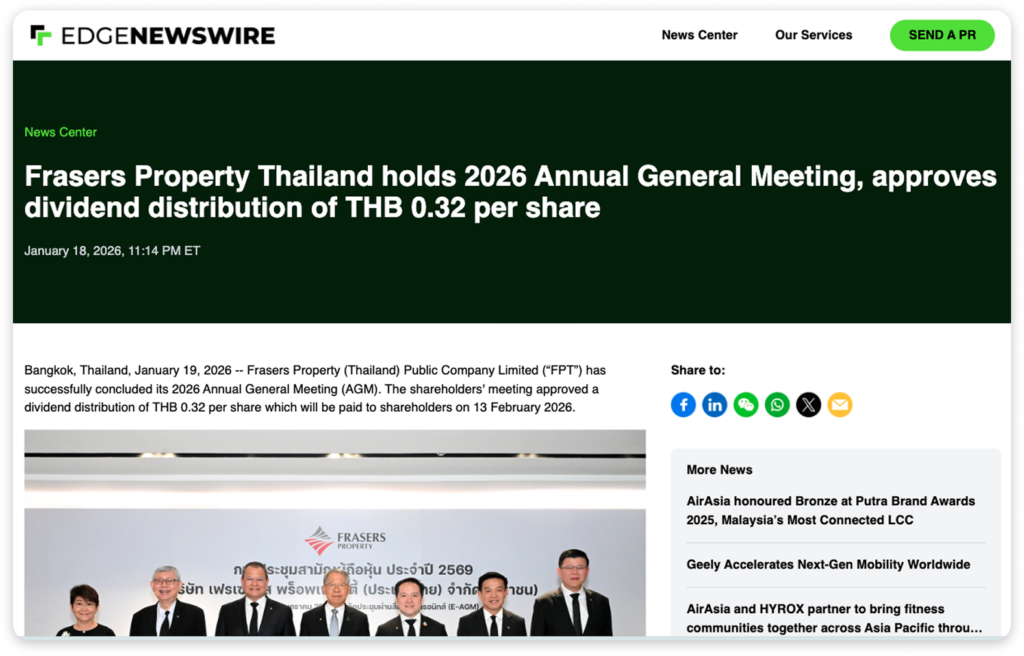
    Example of company milestones press release published on EdgeNewswire:

    Screenshot of an EdgeNewswire press release reporting Frasers Property Thailand’s 2026 Annual General Meeting and the approval of a dividend distribution of THB 0.32 per share.

    By presenting information in a way journalists and editors can quickly understand, a press release increases the chances of your news being picked up and reported.

    So who actually uses press releases?

    Who Uses Press Releases?

    Press releases are used by different groups, each for a specific reason. Understanding these roles helps explain why the format is structured the way it is.

    #1 Press Officers and Communications Teams

    Press officers use press releases to communicate official statements on behalf of an organization.

    Their responsibility is accuracy and clarity. When information needs to be shared publicly, a press release ensures that the details are correct, consistent, and documented.

    This is especially important during sensitive situations such as company changes, public issues, or crisis communication. 

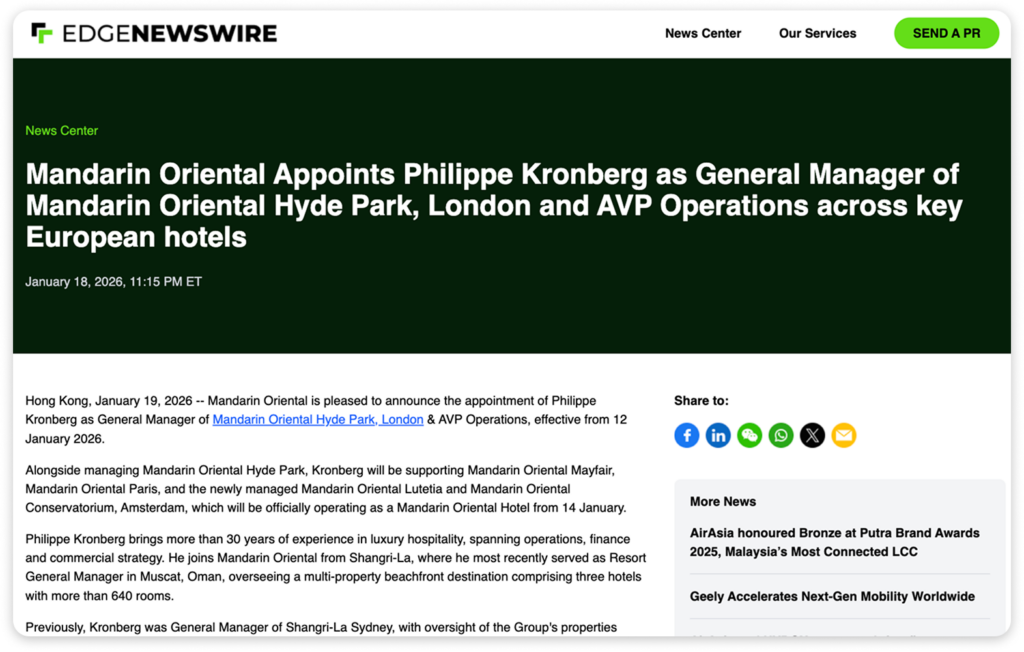
    Example of company changes written in press release and published online:

    Screenshot of EdgeNewswire article page showing a press release about Mandarin Oriental.

    A press release allows organizations to present one clear version of events rather than reacting to speculation.

    Over time, consistent press releases also help shape how an organization is perceived by the public.

    #2 Journalists and Editors

    Journalists use press releases as sources of information and story leads.

    They rely on press releases to quickly understand:

    • What happened
    • Who was involved
    • Why does it matter 

    A well-written press release includes names, dates, locations, quotes, and background context, which saves time during reporting.

    Many news articles begin with a press release and are later expanded through interviews or additional research. 

    #3 Businesses and Organizations

    Businesses use press releases to communicate with audiences beyond their existing customer base.

    Press releases allow companies to share updates without needing direct relationships with every journalist or publication. They help businesses appear active, transparent, and credible.

    They are commonly used to inform investors, partners, customers, and employees about developments that matter. 

    Press releases also help correct misinformation or clarify issues in a controlled way.

    Why Do Businesses Use Press Releases?

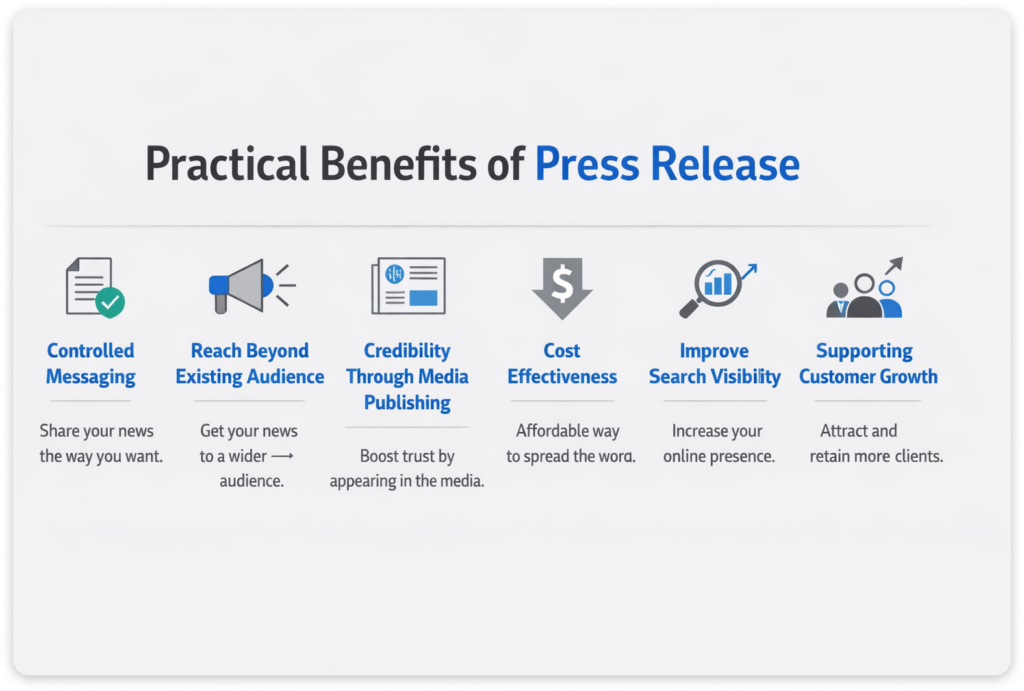
    Press releases provide several practical benefits when used correctly:

    Infographic outlining key benefits of using press releases for business communication.

    #1 Controlled Messaging

    A press release gives businesses control over what information is shared and how it is explained.

    Instead of relying on third-party interpretations, the business provides the original source of information. 

    This is especially important when accuracy matters, such as timelines, figures, or responsibilities.

    #2 Reach Beyond Existing Audiences

    Most businesses primarily communicate with people who already know them.

    Press releases help extend reach beyond websites, email lists, and social media followers. 

    When published by media outlets or news platforms, press releases reach readers who may not otherwise encounter the business.

    #3 Credibility Through Media Publishing

    Information published by media outlets is often perceived as more trustworthy than information published only on a company website.

    When a third-party platform publishes or references a press release, it adds credibility. 

    For instance, when you distribute a press release through EdgeNewswire, your news is made available to established media and information platforms such as Associated Press, Business Insider, Google News, USA Today, Ground News, Barchart, CapEdge, and hundreds of other media and financial sites.

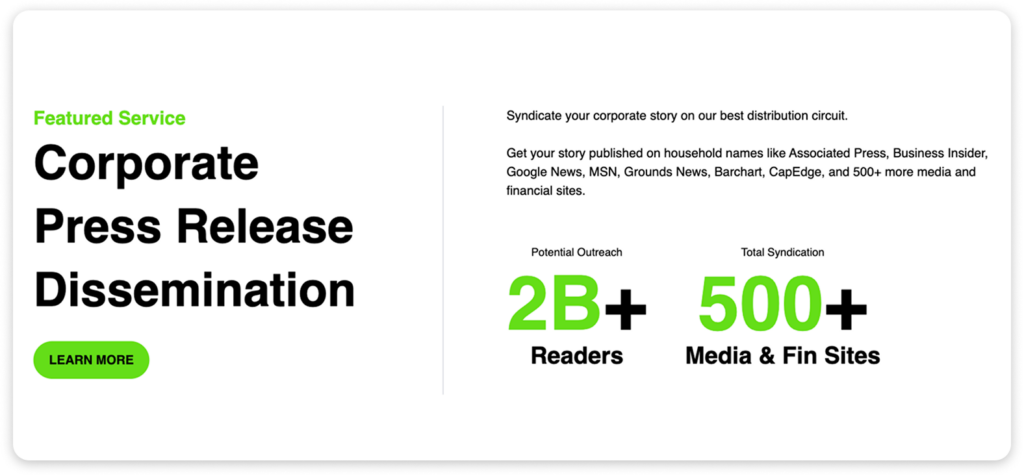
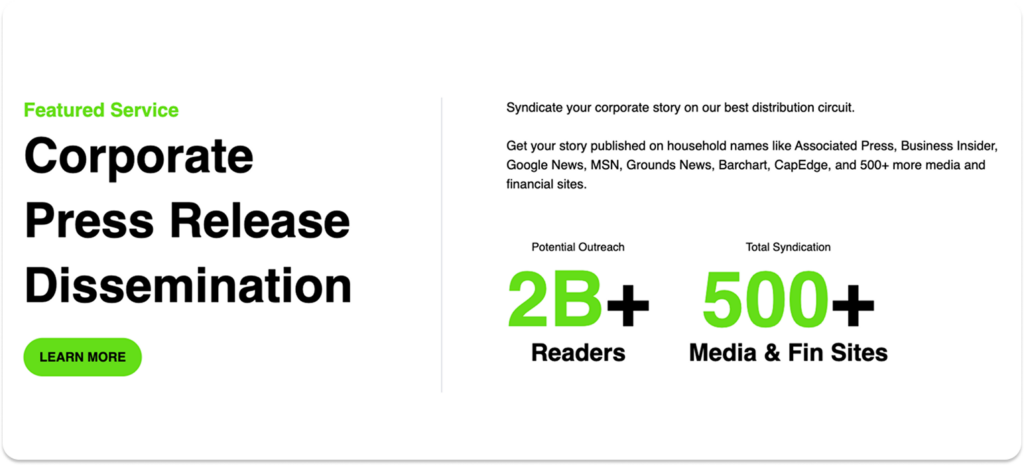
    Corporate press release dissemination service with media reach and syndication metrics.

    This means your announcement is no longer confined to your own platforms. It will have the chance to appear in places where journalists, investors, researchers, and the general public already look for news.

    #4 Cost Effectiveness

    Compared to traditional advertising, press releases are relatively cost-efficient.

    They do not require ongoing spend per click or impression. Once published, a press release remains available as a reference point. 

    This makes press releases a practical option for businesses with limited marketing budgets.

    #5 Improve Search Visibility

    Press releases published online can be indexed by search engines.

    When written clearly and structured properly, they can appear in search results for brand names, announcements, or related topics.

    Over time, this supports discoverability when people research a business.

    #6 Supporting Customer Growth

    Press releases help introduce businesses to new audiences.

    Announcements about launches, partnerships, or milestones can lead people to learn more about what the business offers. 

    While press releases are not sales messages, they support awareness and consideration.

    That brings us to an important question: what actually makes a good press release?

    What Makes a Good Press Release?

    A good press release is easy to read and easy to scan.

    Journalists often decide quickly whether something is relevant. Clear structure matters more than creative language.

    Headline

    The headline should clearly state the main news.

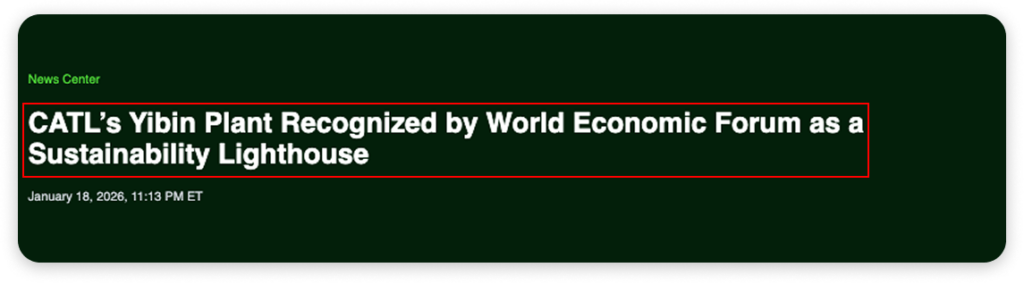
    Screenshot of an EdgeNewswire article headline, with a red box highlighting the text “CATL’s Yibin Plant Recognized by World Economic Forum as a Sustainability Lighthouse.”

    It should explain what happened without exaggeration. Someone should be able to understand the announcement by reading the headline alone.

    Summary

    The summary provides a short overview of the announcement.

    It helps readers quickly understand the main point before reading further.

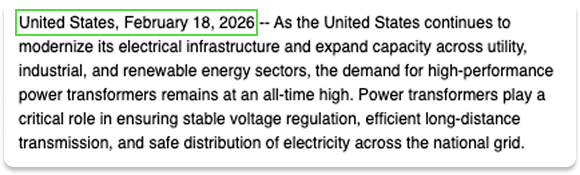
    Dateline

    The dateline includes the city and date of release.

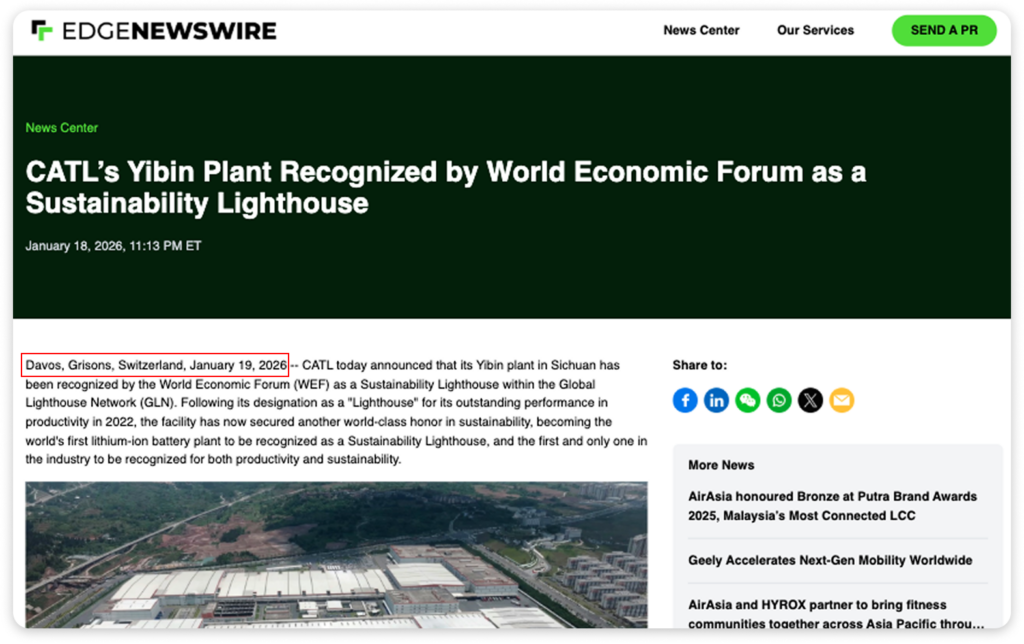
    Example of a press release lead paragraph highlighted on an EdgeNewswire article.

    This provides context and establishes when the news occurred.

    Opening Paragraph

    The opening paragraph should answer the key questions:

    • Who is involved
    • What happened
    • When it happened
    • Where it happened
    • Why it matters
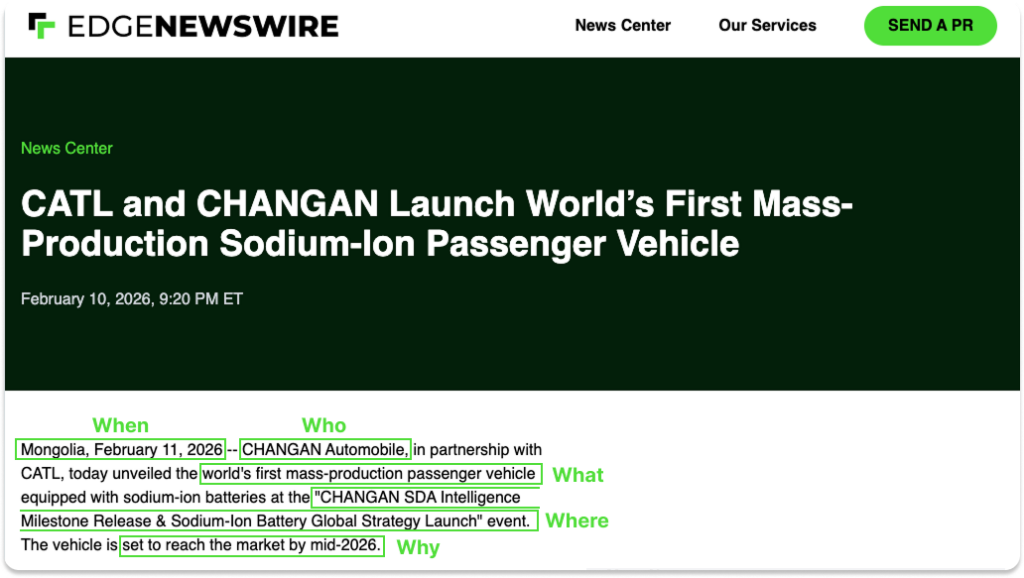
    Example of a press release body paragraph annotated to show the who, what, when, where, and why.

    This information should appear early, not later in the release.

    Supporting Details

    After the opening, the press release should provide additional context.

    This may include background information, explanations, statistics, or quotes from relevant people. Quotes should add insight or perspective rather than repeating facts.

    Boilerplate

    The boilerplate is a short description of the company.

    It explains what the company does in clear, factual language. This section should be consistent across press releases.

    Contact Information

    Clear contact details should always be included.

    Media contact details for Towngas listing Ms. Judy Chan, phone number, and email address.

    Journalists and editors need to know who to contact if they want clarification or follow-up information.

    How to Distribute a Press Release?

    Without proper distribution, a press release usually stays confined to a company’s own website or inbox. 

    That limits reach, credibility, and long-term visibility. Effective distribution places the announcement in environments where journalists, researchers, search engines, and AI systems already look for information. 

    In other words, distribution is what turns a press release from a document into a public signal.

    There are several common ways businesses distribute press releases, each serving a different purpose:

    #1 Emailing Journalists Directly

    Some businesses send press releases directly to journalists and editors.

    This method works best when the announcement is highly relevant to the journalist’s beat. It requires research and personalization and does not guarantee coverage.

    #2 Sharing on Social Media

    Press releases can be shared on platforms such as LinkedIn, X, or Facebook.

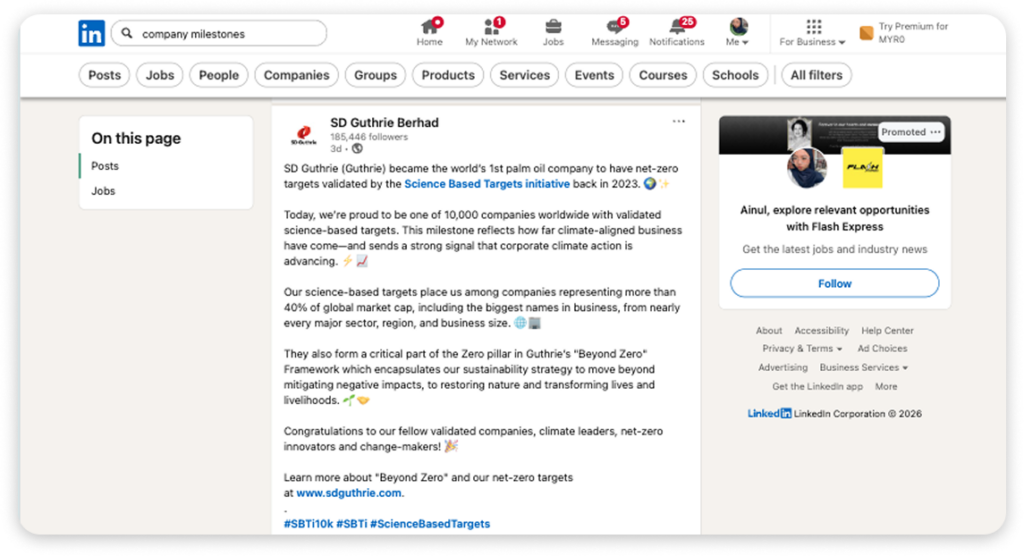
    Example of a company sharing its milestone on LinkedIn:

    Screenshot of a LinkedIn company post by SD Guthrie.

    Social sharing helps increase visibility but works best when paired with context explaining why the announcement matters. It should support, not replace, proper distribution.

    #3 Using Newswire Services

    Newswire services distribute press releases to a broad network of media outlets and news platforms.

    They simplify distribution by handling formatting, syndication, and reach. This approach is useful for businesses that want consistent visibility without managing individual media contacts.

    Platforms such as EdgeNewswire allow businesses to submit press releases and distribute them efficiently across multiple outlets.

    Final Takeaway

    Press releases are a practical way to make information public in a clear and structured format. 

    When written properly, they help ensure that announcements are understandable, traceable, and easy for others to reference over time.

    The effectiveness of a press release depends less on writing style and more on relevance and placement. 

    Clear facts, a standard structure, and appropriate distribution determine whether the information is noticed or overlooked.

    For businesses that want a straightforward way to publish and distribute press releases across established media and news platforms, EdgeNewswire offers a structured starting point.

    Frequently Asked Questions (FAQs)

    Q: How long should a press release be?

    A: A press release is typically between 400 to 800 words. It should be long enough to provide complete information but short enough to remain easy to scan. If it feels like it’s dragging, it usually is.

    Q: How often should a business publish press releases?

    A: There is no fixed frequency. Businesses should issue press releases only when there is something genuinely newsworthy. Publishing too often without meaningful updates can reduce credibility.

    Q: Can a press release be rejected by media outlets?

    A: Yes. Media outlets and journalists decide whether a press release is worth covering. If the content lacks relevance, clarity, or news value, it may be ignored or not picked up.

    Q: Do press releases need to include quotes?

    A: Quotes are not mandatory, but they are strongly recommended. A good quote adds context, perspective, or interpretation that goes beyond the basic facts.

    Q: Can small businesses compete with larger companies using press releases?

    A: Yes. Newsworthiness matters more than company size. A clear, relevant announcement from a small business can still be picked up if it is useful or interesting to the audience.

  • How to Write a Press Release for an Event

    How to Write a Press Release for an Event

    If you are running an event, you need a reliable way to let people know it exists and to help them decide whether it is worth their time. 

    A press release is one of the most straightforward ways to do that.

    An event press release is a structured announcement that covers the basics: 

    • Who is hosting
    • What is happening
    • When and where it takes place
    • Why it matters
    • How people can take part 

    For example:

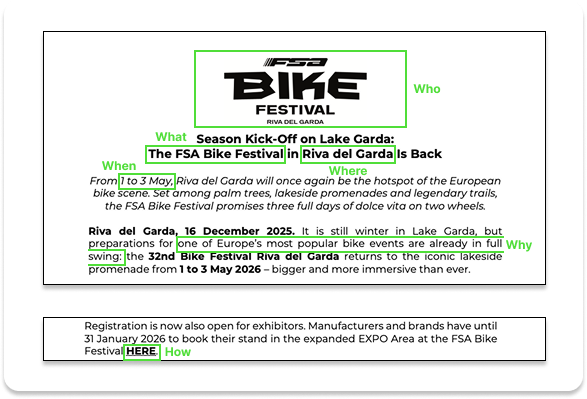
    Annotated FSA Bike Festival press release highlighting who, what, when, where, why, and how.

    The goal of the press release is not to sound impressive. Instead, it is to make sure the information about the event is easy to understand and easy for the audience to act on once they read your press release.

    This is where event press releases differ from general announcements. 

    A normal press release often exists to document a change. An event press release has a more practical purpose. 

    It needs to help someone make a decision. Should I attend this? Should I share this? Should I care about this at all?

    To understand how to do that, it helps to start with a simple question: why do you need an event press release?

    Why You Need an Event Press Release

    You need an event press release because it gives your event a clear, credible way to reach people who are not already in your circle.

    More practically, it does a few important jobs:

    1. It helps people decide to attend

    The main purpose of an event is simple. You want people to show up.

    A good event press release puts the key details in one place and explains why the event is worth someone’s time. 

    Date, location, topic, and reason to attend should all be clear. If people have to guess, scroll, or search for basic information, many will not bother.

    The easier it is to understand what the event is and how to join, the more likely someone is to make a decision.

    Warning: Many weak event announcements fail here. They spend too much time talking about the organizer and not enough time explaining what actually happens at the event. Or they bury the registration link. Or they assume the reader already knows why the topic matters.

    2. It extends your reach beyond your own audience

    Your website, email list, and social channels mostly reach people who already know you. That is fine, but it has limits.

    Media coverage can put your event in front of people who would not otherwise hear about it. Even a small mention in a relevant publication can introduce your event to a new audience that already cares about the topic or industry..

    Over time, this also helps more people recognize your brand, not just this one event. But that is a side effect, not the main goal.

    3. It adds credibility

    A properly written press release signals that your event is organized and serious. It shows that you have thought through the details and are willing to put them in front of the public.

    That matters for attendees, but also for partners, sponsors, and speakers. 

    People are more comfortable associating themselves with something that looks clear and well put together.

    It also matters for journalists. Clear, well-structured information is easier to use. 

    If your release is confusing or sloppy, it creates extra work for them. Extra work is a good reason to skip your story.

    Types of Event Press Releases

    Not every event press release serves the same purpose. The timing changes what it is for.

    1. Pre-event press release

    This is the main announcement. It goes out before the event and focuses on awareness and interest.

    It should answer the basics and give people enough information to decide whether to attend and to plan for it. In most cases, this is the version you spend the most time on.

    The most common mistake here is waiting too long. If you send a pre-event release too close to the date, you limit who can realistically attend and how likely journalists are to cover it.

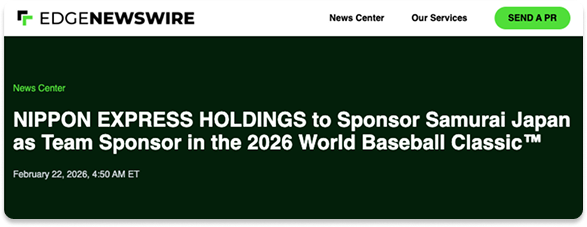
    Example of pre-event press release: 

    Screenshot of an EDGENEWSWIRE press release announcing Nippon Express Holdings as a team sponsor for Samurai Japan in the 2026 World Baseball Classic.

    This is considered a pre-event press release because the 2026 World Baseball Classic has not taken place yet, and the announcement focuses on a sponsorship agreement made ahead of the tournament. 

    Its purpose is to build awareness and set context before the event begins by informing the public about Nippon Express Holdings’ involvement with Samurai Japan, rather than reporting on outcomes or recapping what has already happened.

    2. Day-of-event or live update press release

    This is used when timing matters. 

    For larger events, conferences, or public announcements, you may need to share last-minute updates, changes, or highlights as they happen.

    This is not always necessary. For many smaller events, it is overkill. But for time-sensitive or news-driven events, it can help keep coverage accurate and current.

    3. Post-event press release

    After the event, this version focuses on what happened such as:

    Infographic showing three items: Key Moments, Outcomes, and Takeaways, each with a simple icon.

    This helps extend the life of the event. 

    It creates a public record that you can reference later and gives you something concrete to point to when talking about results.

    It is also useful when the event itself is not the end goal, but part of a larger initiative.

    Each type serves a different purpose, but they all rely on the same fundamentals. The difference is in what you emphasize and when you send it. 

    That brings us to the practical part.

    Event Press Release Structure

    The structure is similar to a normal press release. The difference is in emphasis. For events, clarity and action matter more than anything else.

    1. Headline

    The headline should tell people what the event is and why it matters.

    Headline announcing Yotta, a new event by DatacenterDynamics focused on the future of digital infrastructure.

    Keep it short. Be specific. Avoid vague language. The goal is not to impress. Instead, the headline is to make the event clear at a glance.

    2. Summary

    This is the short version of the story. The usual practice is to use two or three sentences. It should answer the basics at a glance: what is happening, who it is for, and why it matters. 

    If someone only reads this part, they should still understand what the event is about.

    Think of the summary as the filter. A busy editor, journalist, or reader will often decide whether to keep reading based on these few lines. 

    If the summary is vague, overloaded with buzzwords, or focused on internal language, many people will stop right there. A clear, practical summary makes it easy for them to see why the event is relevant and worth their time.

    3. Dateline

    The dateline sets context. It tells the reader where the announcement is coming from and when.

    Press release opening paragraph with a U.S. dateline discussing demand for high-performance power transformers and electrical infrastructure.

    This sounds minor, but it helps anchor the news in time and place, especially for events that are tied to a specific location.

    4. Body

    Start with the most important part of the event. Not your company history or background context. 

    You need to lead with what makes the event relevant.

    Then cover the details:

    • What kind of event it is, in-person, virtual, or hybrid
    • When and where it happens
    • Who should attend and why
    • What makes it useful or different
    • Any notable speakers or highlights
    • How to register or get more information

    Warning: This is where many releases become hard to use. They either dump too much information without structure, or they stay so vague that nothing is clear.

    The goal is to say the right things in a way that is easy to scan and understand.

    If you include quotes, they should add clarity or context. A quote that just repeats the headline in longer form does not help.

    5. Boilerplate

    This is the short “about the company” section. Three or four sentences is enough. Its job is to explain who you are and why you are relevant to the event. 

    About Transformers & Rectifiers (India) Ltd.” section describing the company as a global transformer solutions manufacturer.

    6. Contact information

    For this section, you need to include the details a journalist would use to reach you. 

    This section is necessary in case a journalist needs more information than what is in the release. 

    When that happens, they should be able to look here and immediately see who to contact and how to reach them.

    Include the contact person’s name, role, and clear contact details such as an email address or phone number, so follow-up is simple and fast.

    Press release contact information listing company name, email, and website for Transformers & Rectifiers (India) Limited.

    Guidelines for Writing Event Press Release

    1. Start with a real angle

    Every event has a reason to exist. 

    When you write about it, you should be able to point to something concrete, such as a timely topic, a specific audience, or a practical outcome. That is the angle.

    Leading with this matters because it explains why the event is relevant to people outside your organization. 

    If you cannot clearly show why this event matters now, it will be hard for anyone else to care or to cover it.

    2. Use clear, direct language

    You should use plain language to make sure the audience can understand the event at one glance. The goal is not to sound clever or impressive, but to be clear.

    This is important because journalists and readers often skim first. If a sentence is easy to misread or misunderstand, it probably will be, and that usually means the message gets lost.

    3. Avoid hype

    Overly promotional language makes your release harder to trust and harder to use. Journalists are trained to spot it and filter it out.

    To avoid that, stick to facts, context, and real reasons to attend the event. 

    This approach gives your release a much better chance of being taken seriously and actually used.

    4. Be specific about value

    In the press release, be clear about what someone will actually get from attending. The important details include:

    What will they learn? Who will they meet? What problem does the event help them solve?

    If you are vague about these important details, it becomes much harder for people to decide whether the event is worth their time.

    5. Use numbers if necessary

    If your event has 20 speakers, say so. Concrete details are easier to understand than general claims because they give people something real to picture and evaluate. 

    Saying “many speakers” or “an exciting lineup” does not tell the reader what they are actually getting. 

    Specific details help people decide whether the event is relevant to them and worth their time.

    6. Keep it easy to scan

    Short paragraphs and clear sections make your press release easier to read. Many people, especially editors and journalists, will skim first before deciding whether to read closely.

    A press release that is easy to scan helps them quickly find the key details they need. 

    If the structure is messy, important information gets missed and the story is more likely to be ignored.

    7. Proofread

    Mistakes in a press release will make you look unprofessional. They make you look careless and make journalists less likely to trust the details you are sharing. 

    If basic facts, names, or dates are wrong, it raises questions about what else might be wrong too.

    This is basic, but it is still one of the most common problems. 

    A release with errors is easier to ignore and harder to take seriously, especially when a journalist is deciding what to use under time pressure.

    Once you have worked through these guidelines, your press release should be clear and ready to use. 

    But good writing on its own is not enough. A well-written press release still needs proper distribution to have any real impact.

    If it does not reach the right journalists, publications, or audiences, it will not get read or used, no matter how good it is. 

    That is why distribution matters just as much as writing, and why the next step is to think carefully about how to get your event press release in front of the right people.

    How to Distribute Your Event Press Release

    There are several ways to get your press release out. You can publish it on your own site, send it directly to journalists, share it through partners, or use distribution platforms. 

    Each option has different trade-offs in terms of reach, control, time, and effort.

    The right approach depends on your goals, your audience, and how much time and resources you can realistically put into promotion. 

    What matters most is choosing the ones that actually help your release reach the people who are likely to care about your event.

    1. Publish it on your own site

    Publishing your press release on your own site gives you a stable reference point. 

    It creates a page you can link to, share, and point journalists or partners to. It also helps with search visibility over time, since the content is indexed and stays accessible.

    However, this is a passive step. 

    People still have to come to you to see it. Simply posting a press release on your site does not create attention on its own. 

    That is why this should be treated as infrastructure, not distribution. It supports your outreach, but it does not replace it.

    2. Share it through your own channels

    Social media and email are simple ways to spread the word about your event, especially to people who already follow you or are on your mailing list. 

    They are useful for making sure your existing audience knows what is happening and has an easy way to get the details.

    But, the limitation is reach. 

    Most of the time, these channels mainly circulate your message within your current network. That is helpful, but it does not do much to introduce your event to people who have never heard of you before.

    3. Send it to a focused media list

    You can also reach out directly to journalists who cover your industry or topic. 

    This takes more time than posting on your own channels, but it gives you more control over who sees the story and how it is positioned. 

    When done properly, this approach can lead to more relevant and higher-quality coverage.

    The key here is relevance. 

    A small, well-targeted list of journalists who actually cover your space usually works better than sending the same message to a large, generic list that includes people who are unlikely to care.

    4. Use a press release distribution service

    Distribution services exist to solve a simple problem: getting your press release in front of more outlets without doing everything manually. 

    They are not magic, but they are efficient, especially when you need scale, consistency, or speed. 

    Instead of emailing dozens of contacts one by one, you can rely on a system that already has distribution in place.

    For example, services like EdgeNewswire can distribute your press release to established media outlets such as USA Today, AP News, and Business Insider

    This will make your release easier to access for publishers and journalists who use those networks.

    These services are most useful when you want broader reach, predictable distribution, and reporting on where your release appears. 

    They do not replace good writing or a good story. They simply make the distribution part easier and more reliable.

    Final Takeaway

    Your event press release is competing with many others for attention. 

    The way to stand out is not by making bigger claims or using louder language. It is by being clearer, more useful, and better timed than the rest.

    Clear information helps people understand what the event is and why it matters. Good timing gives your release a better chance of being seen. 

    And good distribution makes sure it actually reaches the people who might care. Even a well-written release does very little if it never gets in front of the right audience.

    If someone can quickly understand the event, see why it is relevant, and know what to do next, your press release is doing its job. 

    The combination of clear writing and smart distribution is what makes that happen.

    Frequently Asked Questions (FAQs)

    Q: How far in advance should I send an event press release?

    A: There is no single perfect timeline, but most events benefit from being announced at least two to four weeks in advance. 

    This gives journalists time to plan coverage and gives potential attendees time to adjust their schedules. For larger events, conferences, or events that require travel, you may need even more lead time. Sending it too late limits both attendance and media interest.

    Q: Should I send more than one press release for the same event?

    A: In many cases, yes. A common approach is to send a pre-event release to announce the event, and a post-event release to summarize what happened. For larger or news-driven events, you might also send a short update closer to the date or on the day itself. The key is not to repeat the same message, but to update the angle and purpose each time.

    Q: Do I need a different press release for different audiences?

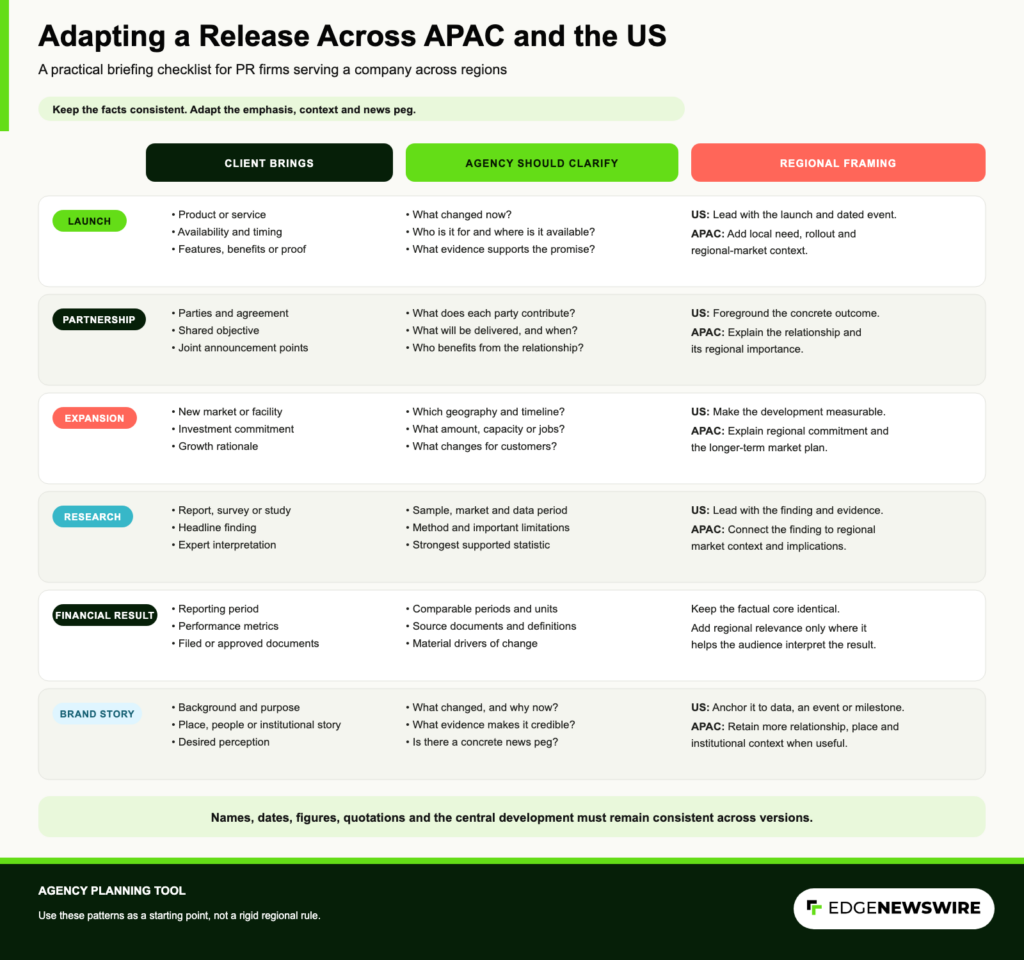
    A: Often, yes. The core facts stay the same, but what you emphasize can change. An industry publication may care more about the business or technical angle. 

    A local outlet may care more about location and community impact. Adjusting the framing makes your release more relevant without changing the underlying information.

    Q: Can I reuse the same event press release every year?

    A: You can reuse the structure, but not the content. Journalists and readers want to know what is new or different this time. Dates, speakers, topics, and outcomes should be updated. If the release looks like last year’s with a few numbers changed, it is much easier to ignore.

    Q: Is it better to attach the press release or paste it into the email?

    A: In most cases, pasting the press release into the email works better. Many journalists prefer not to open attachments unless necessary. Keeping everything visible in the email makes it easier for them to quickly scan and decide whether the story is relevant.

  • How to Write Great Press Release Headlines (Examples Included)

    How to Write Great Press Release Headlines (Examples Included)

    A press release headline has one job. It earns the next line.

    Editors scan dozens, sometimes hundreds, of headlines a day. Readers do the same. If your headline feels confusing, vague, or salesy, the press release usually does not get a second chance.

    This is why headlines can quietly decide your entire outcome.

    You can have a well-written body, a clear announcement, and a credible company behind it. None of that helps if the headline fails to explain what happened and why it matters. 

    The headline needs to be understood, fast.

    A strong press release headline makes your news feel like news. It tells the right people, in the fewest possible words, that the story is worth their time.

    What Editors and Readers Want From a Headline

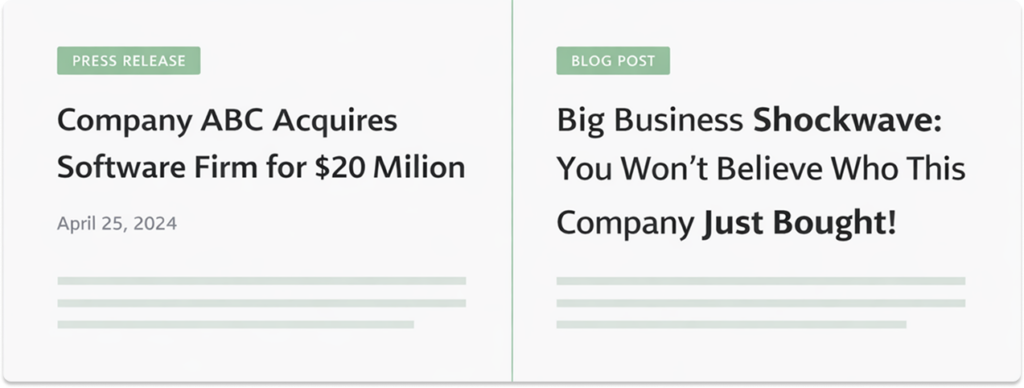
    Press release headlines are not blog titles. They do not need to sound chatty. They also do not need to sound dramatic. They need to sound credible.

    Comparison between press release headline and blog post title:

    Comparison between a clear, factual press release headline and a dramatic, hype-style blog headline.

    When editors look at your headline, they are usually asking three questions:

    1. What happened?
    2. Is it relevant to my audience?
    3. Do I trust this enough to keep reading?

    When readers see your headline, they tend to ask a simpler version:

    • What is this about, and should I care?

    If your headline answers those questions quickly, you get the click, the read, and sometimes the pickup.

    If it does not, the release gets ignored, even if the announcement is important. The difference usually comes down to specific qualities.

    The Qualities of a Strong Press Release Headline

    You do not need a hundred headline tricks. You need a few principles you can apply to almost any announcement:

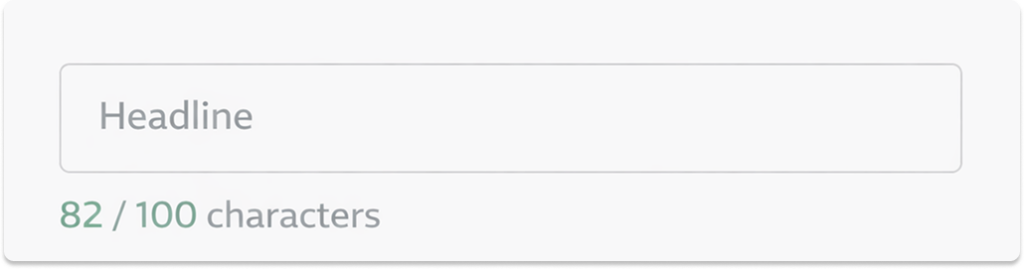
    1. Clear and concise

    Your headline should be short enough to scan in one breath. As a practical guide, aim for around 80 to 100 characters or no more than 15 words.

    Minimal UI mockup showing headline input fields with character counters: “82 / 100” in green.

    Short does not mean vague. It means no extra padding.

    A headline that is too long forces the reader to work. Most readers will not.

    2. Simple language, not complicated vocabulary

    Trying to sound “smart” often backfires.

    A headline should be readable by someone who knows nothing about your company. If a reader has to decode your wording, they move on.

    Compare these two approaches:

    • “There are more trucks on the road, and less-qualified drivers, says local lawyer”
    • “Omaha personal injury lawyer alerts drivers about truck crash rates and insurance premium spikes”

    Both convey similar meaning, but one is easier to understand immediately. Clarity wins.

    3. Reader relevance

    Most people do not care about your company update by default. They care about what it means for them.

    So instead of framing the headline around your internal achievement, frame it around the impact.

    If you are expanding to a new location, mention the location. If you are launching a product, mention the use case. If you are sharing data, mention the insight.

    The reader should be able to tell why the headline matters without opening the release.

    4. Shareability without hype

    A shareable headline usually has one thing: it signals a value or emotion people identify with.

    That could be:

    • A clear win for customers
    • A helpful insight
    • A strong public benefit
    • A clear milestone that feels impressive

    The key is to avoid exaggerated language. You can write something people want to share without sounding like you are trying to force attention.

    5. Curiosity with boundaries

    Curiosity is useful, but it has limits.

    A strong headline can tease a detail that makes the reader want to learn more. But if you hide too much, it becomes vague. If you tease too aggressively, it turns into clickbait.

    The safe version of curiosity is this: make the story clear, then leave some details for the body.

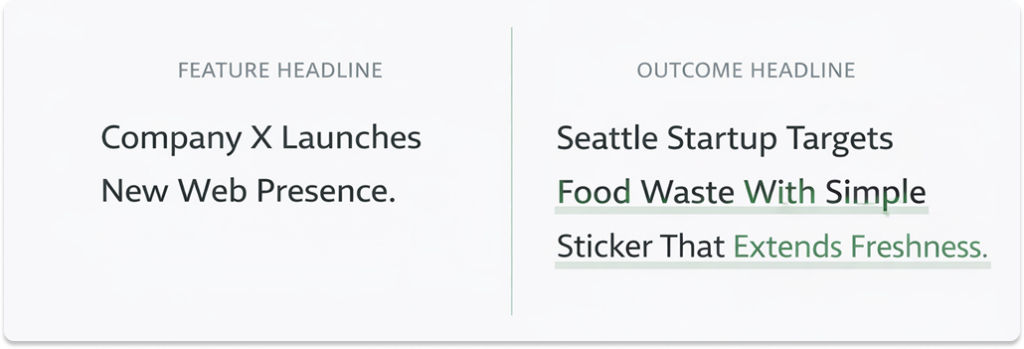
    6. Benefits over features

    Features are not automatically interesting. Outcomes are. For instance:

    A comparison between a feature-focused headline and an outcome-driven headline.

    The difference is structural. The first headline tells us what the company did. The second tells us why it matters.

    Editors and readers care less about internal milestones and more about impact. A new website is a company update. Reducing food waste is a public outcome. One is operational. The other has relevance.

    Benefit-driven headlines answer an unspoken question immediately: Why should I care?

    They signal consequences. They show change. They imply value beyond the company itself.

    That does not mean every headline needs to sound dramatic. It means the focus should shift from the action taken to the result created.

    When a headline communicates outcome, it moves from being an announcement to being a story.

    A Practical Headline Writing Process

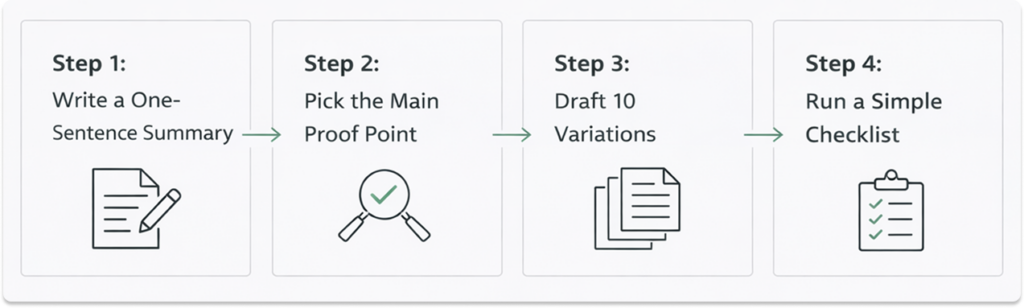
    A four-step infographic showing a headline writing process.

    The easiest way to write better headlines is to stop treating the headline as the first step. Instead, treat it as the final step.

    Step 1: Write a one-sentence summary of the news

    Before you write any headline, write a single sentence that explains:

    • Who is involved
    • What happened
    • Why it matters

    This becomes your anchor. It prevents vague headlines because you are forced to clarify the story first.

    Step 2: Pick the “main proof point”

    Every press release has one detail that makes it worth reading. Identify it.

    It could be:

    • A number, like 20,000 reviews
    • A known brand, like a major partner
    • A clear outcome, like faster publishing or safer travel
    • A location that adds relevance

    Your headline should include this proof point when possible.

    Step 3: Draft 10 variations quickly

    Do not aim for perfection on draft one. Write 10 options in a row, fast.

    You are not trying to “be creative.” You are trying to explore angles:

    • Benefit angle
    • Data angle
    • Local relevance angle
    • Partnership angle
    • Milestone angle

    This gives you choices and prevents you from settling for the first okay idea.

    Step 4: Run a simple checklist

    Before choosing your headline, check:

    • Is it understandable in 3 seconds?
    • Does it sound like news, not an ad?
    • Would a stranger understand what happened?
    • Does it contain a concrete detail when possible?
    • Does it match what the press release actually delivers?

    If your headline promises something the body does not support, it creates distrust. That is an easy rejection trigger.

    Headline Rules That Keep You Out of Trouble

    These are the small rules that improve credibility and reduce risk.

    a) Use present tense for current news

    Press release headlines often use present tense even when the event has already occurred. It keeps the headline immediate and news-like.

    Example pattern:

    Three headline examples highlighting present-tense verbs.

    b) Prefer active voice

    Active voice is usually shorter and clearer.

    • Active: “Company X Launches New Product”
    • Passive: “New Product Launched by Company X”

    Active voice feels cleaner and more direct.

    c) Use numbers only when they are real and defensible

    Numbers make headlines stronger because they signal scale.

    But numbers also create scrutiny. If you include a figure, be ready to support it inside the press release or with a source.

    d) Avoid blog-style phrasing

    Press release headlines should not sound like social captions.

    Avoid:

    • “Guess what happened next…”
    • “You won’t believe…”
    • “Here’s why everyone is talking about…”

    Those styles reduce credibility and make the release feel promotional.

    e) Avoid hyperbole and sales language

    Terms like “revolutionary,” “groundbreaking,” and “best-in-class” usually weaken a press release headline.

    Editors do not want slogans. They want clear news.

    f) Write the headline last

    A headline written too early tends to misrepresent the story. When you finish the body first, you will naturally see the real main angle and proof point.

    g) Use AI as a brainstorming tool, not a replacement

    AI can help you generate options or explore angles. The best use is to produce multiple variations quickly, then you choose and refine the best one to match your story.

    Examples of Strong Press Release Headlines

    Below are examples of headlines that work because they are clear, specific, and anchored in value.

    Example 1: Purpose plus local relevance

    A headline about launching a mosquito protection initiative with a product launch in Malaysia works because it combines:

    • A public benefit people understand
    • A concrete product name
    • A clear location that adds relevance

    It reads like news and gives the reader a reason to care.

    Example 2: Partnership with clear geography

    A Traveloka and Cebu Pacific partnership headline works because it includes:

    • Two recognizable brands
    • A clear region and destination
    • A direct action, “partners,” that signals what happened

    It is informative without being overloaded.

    Example 3: Benefit-led product update

    A SurgeGraph headline about an auto-optimizer tool works because it leads with the outcome people want, which is speed and efficiency. It also creates a natural curiosity about how the tool works without making exaggerated promises.

    Example 4: Milestone with a strong number

    A headline celebrating 20,000 Trustpilot reviews works because the number does the heavy lifting. It is easy to grasp, easy to verify, and it signals trust, which is exactly what reviews are about.

    Example 5: Curiosity without clickbait

    A headline hinting at “Google linking secrets” works because it promises clear value to a specific audience, while still sounding like a legitimate announcement. The “free ebook” element adds a concrete incentive, not a vague tease.

    Final Takeaway

    Press release headlines are not decoration. They are the entry point.

    A strong headline does three things well. It tells the reader what happened, why it matters, and why they should trust it. When those pieces are in place, your press release becomes easier to open, easier to scan, and more likely to be taken seriously by editors.

    The simplest way to improve your headlines is to slow down and treat them as a process. Write the body first, identify the main proof point, draft multiple options, and then choose the headline that sounds like clear news.

    If you do that consistently, you will not just write better headlines. You will write headlines that make your entire press release perform better.

    Frequently Asked Questions (FAQs)

    Q: Should a press release headline include the company name?

    A: Often yes, but not always. If the brand is known or the company name adds credibility, include it. If the headline becomes too long, prioritize clarity and the main news first.

    Q: Is it okay to use a question as a press release headline?

    A: It is usually better to avoid questions. Questions can sound like blog content or clickbait. A press release headline generally performs better as a direct statement of news.

    Q: Should you include your keyword at the beginning of the headline?

    A: If it fits naturally, yes. Early placement helps search engines and helps readers understand the topic faster. But forcing a keyword into an awkward position can reduce clarity, which hurts more than it helps.

    Q: Do press release headlines need title case capitalization?

    A: Not necessarily. Many press release headlines use sentence-style capitalization. What matters most is consistency and readability. If your brand has a style guide, follow it.

    Q: Can a press release headline be different across distribution channels?

    A: Yes. You can use a formal version for wire distribution and a shorter variation for email outreach or social sharing. The core claim should remain consistent, but the presentation can be adapted to fit the channel.

  • Press Release 101: What to Write, Who Reads It, and Where to Send It

    Press Release 101: What to Write, Who Reads It, and Where to Send It

    Most press releases are written correctly and ignored completely.

    The format is not the problem. Journalists still rely on press releases: 72% of reporters named them as the most useful resource PR teams can provide, according to Cision’s 2025 State of the Media Report. 

    The problem is that the majority of releases are written as internal announcements dressed up in AP style. They reach the right inbox and die there.

    This post covers the format, the structure, and the strategy behind every element — including the 2026 layer that no “101” guide currently addresses: what happens to your release after a journalist reads it, and whether an AI answer engine decides your brand is worth citing.

    What a Press Release Is

    A press release is an official announcement written for journalists, not for your customers.

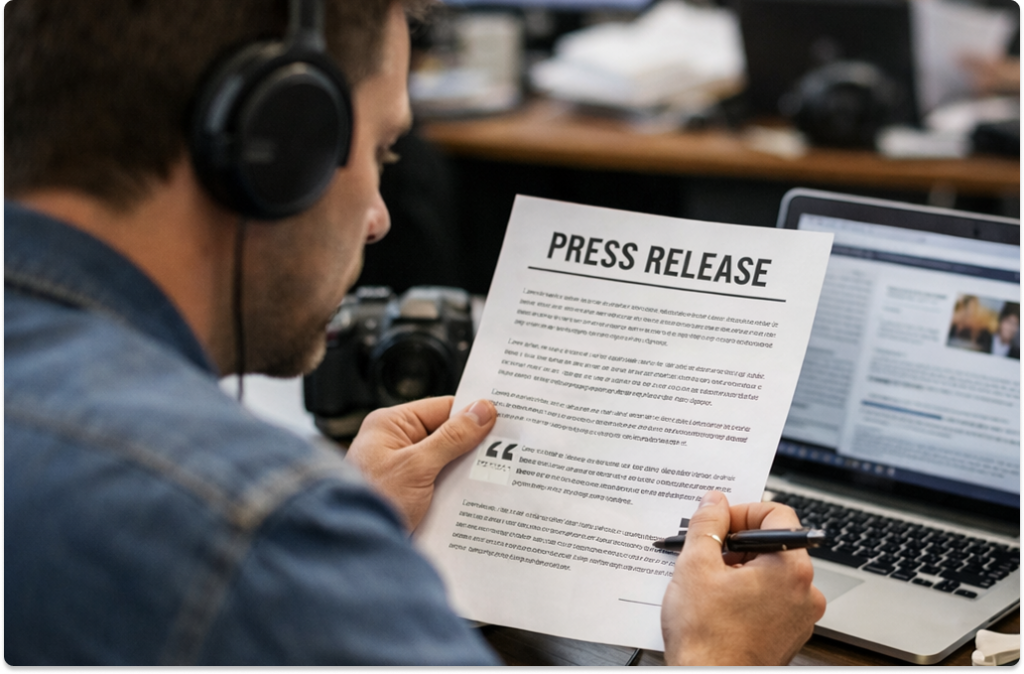
    A journalist reviewing a press release.

    A press release is not a blog post. It is not a product page. It is not a brand story. 

    It is a structured document that gives a reporter everything they need to file a story without calling you for clarification. 

    When it works, the journalist lifts your framing, quotes your spokesperson, and publishes something that reaches an audience you could not have reached directly. That is the entire value of the format.

    Press Release Format and Structure

    Every press release follows the same structural order. Journalists expect it. Deviating from it signals that the sender does not understand how newsrooms work.

    The table below maps each element to its function and the standard it needs to meet:

    ElementPurposeStandard
    Release StatusSignals timing to the journalist“For Immediate Release” or a dated embargo
    HeadlineThe journalist’s first filter65–80 characters, newsworthiness first
    SubheadlineAdds context to the headlineOne sentence, key detail the headline omits
    DatelineEstablishes source location and timingCity, STATE, Date — AP Style
    Lead ParagraphAnswers the 5 Ws50 words maximum
    Body ParagraphsContext, supporting data, narrative2–3 paragraphs, most important detail first
    QuoteReady-to-publish spokesperson voice1–2 quotes, conviction over corporate speak
    BoilerplateStandard company description3–5 sentences, consistent across all releases
    Contact InformationJournalist follow-up pathwayName, email, phone — never buried at the end

    This is the skeleton. Every element has a job. Miss one, and you create friction for the journalist trying to use your release.

    a) The Headline

    Your headline is the only part of your release most journalists will read before deciding to continue.

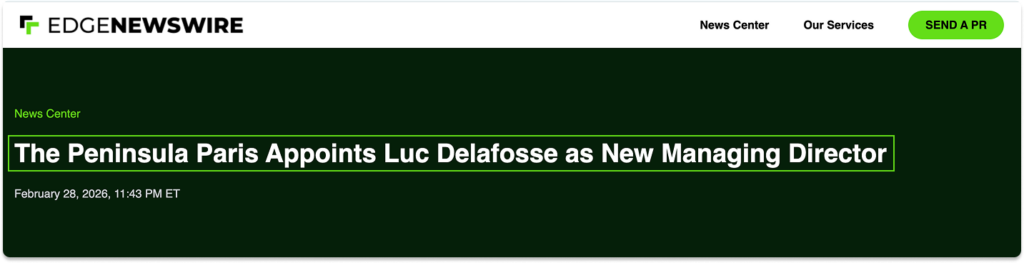
    Media headline generated from a company press release announcement.

    It needs to communicate the news in plain language. Not brand language. Not marketing language. The test is simple: could this headline appear in a newspaper without modification? 

    If the answer is no, rewrite it. Front-load the subject. Use an active voice. Cut anything that sounds like it belongs in an ad.

    b) The Lead Paragraph

    In 50 words or fewer, the lead paragraph answers five questions: 

    • Who
    • What
    • When
    • Where
    • Why 

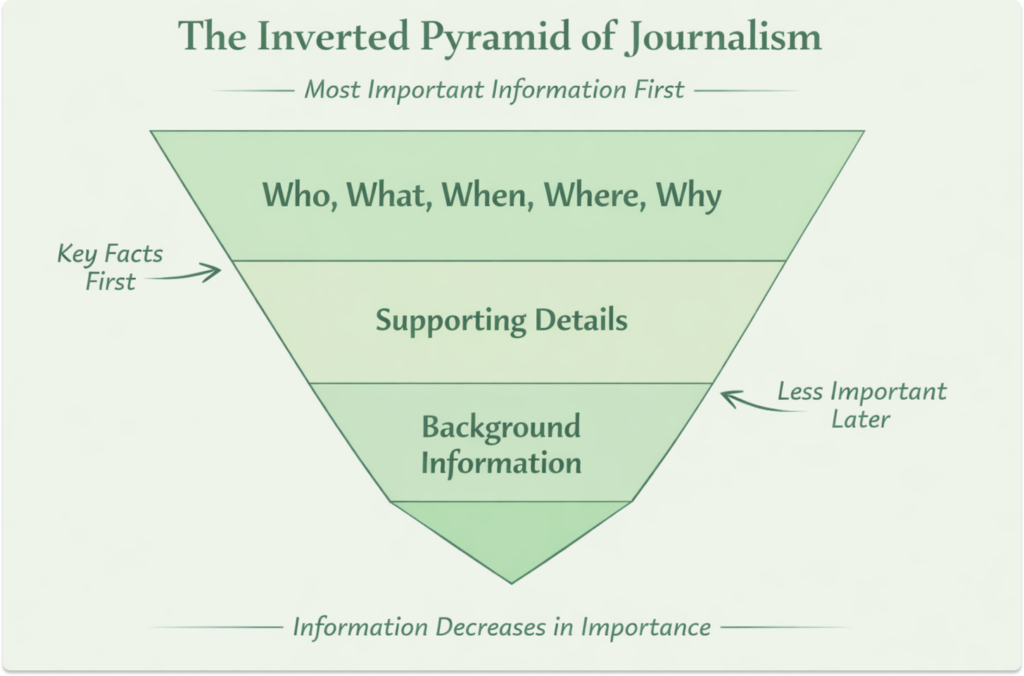
    This is the inverted pyramid in practice. 

    Inverted pyramid journalism diagram showing the most important information at the top (Who, What, When, Where, Why), followed by supporting details and background information in descending order.

    The most critical information sits at the top. Details taper downward in order of importance. The logic is practical: a journalist who needs to cut your release for space will cut from the bottom. 

    If your most newsworthy fact is in paragraph three, it disappears. Write the lead as if the journalist will read nothing else. Because sometimes, they won’t.

    c) Body, Quotes, and Boilerplate

    The body paragraphs expand the lead. They add supporting data, relevant context, and the secondary details that give a reporter enough material to write a full story.

    Quotes belong here, and they need to earn their place. 

    A quote that restates what the body paragraph already said is wasted space. A quote should add voice, perspective, or conviction that plain prose cannot carry. 

    Write quotes the way a real person speaks under pressure — direct, specific, accountable. Journalists use quotes because they add texture to a story. Give them something worth using.

    The boilerplate closes the release. It is a standardized paragraph about your organization. Keep it consistent across every release you publish. 

    This is how AI systems and search engines begin to build an entity understanding of your brand.

    d) Contact Information

    Include a name, direct email address, and phone number.

    Press release media contact section showing a name, email address, and phone number for journalist inquiries.

    This is not optional. Reporters work on deadlines. If your contact information is missing, incomplete, or routes to a general inbox, you have made it easier for a journalist to move on than to follow up.

    What Makes a Press Release Newsworthy

    Writing a structurally correct press release is not the same as writing a newsworthy one.

    Only 10% of the press releases journalists receive are relevant to their beat or audience (Cision, 2025). 

    That number is the core problem with how most brands approach the format. 

    They publish announcements — internal milestones dressed up as public news. A new hire, a rebranded logo, a product update that changes three features. These are not news. They are internal events.

    News has an external angle. It connects your announcement to something that already matters to the journalist’s audience.

    Ask yourself: if your company disappeared from this story, would it still be a story? If the answer is yes, you have found the news angle. If the answer is no, you are writing an advertisement and calling it a press release.

    The newsworthiness filters journalists apply before deciding to cover a story:

    • Timeliness: Is this happening now, or is it old news with a new press release?
    • Relevance: Does this connect to a trend, issue, or topic their audience already follows?
    • Impact: How many people does this affect, and how significantly?
    • Credibility: Is there data, a third-party source, or an accountable spokesperson attached?

    Run your release through all four before you send it.

    Press Release Distribution

    Writing the release is half the work. Distribution determines whether anyone reads it.

    There are three primary channels, and the most effective campaigns use all three in sequence.

    1. Direct journalist outreach

    This method is the highest-quality channel. 

    A release sent directly to a reporter who covers your beat — with a one-paragraph pitch explaining why their audience will care — outperforms any mass distribution approach for premium placement. 

    Nearly 90% of PR professionals prefer direct email outreach for securing meaningful coverage. The tradeoff is time: it requires a targeted media list and personalized pitching at scale.

    2. Newswire distribution 

    This approach provides breadth. 

    It gets your release in front of a wide network of outlets, financial platforms, and media aggregators simultaneously. 

    96% of PR professionals use a newswire service at least once within a 12-month period. The value is reach and indexation: newswires push your release to search engines and, increasingly, to the AI systems that pull from indexed news content to generate answers.

    3. Owned channel amplification

    Your website newsroom, email list, LinkedIn, and X, these channels extend the reach of both approaches and gives your existing audience a direct line to your announcement.

    The combination matters.Brands that distribute via wire and amplify across social channels see 2.5x the overall reach compared to wire distribution alone.

    If you want a distribution layer built for the way media actually works in 2026 — one that indexes your release for AI discovery, generates a social media kit automatically, and tracks brand authority rather than vanity impressions — EdgeNewswire handles that entire layer from a single submission.

    Corporate press release distribution service highlighting 2B+ reader reach and syndication across 500+ media and financial sites.
    EdgeNewswire press release distribution service

    Press Release Mistakes to Avoid

    #1 Promotional tone

    The moment a journalist reads a superlative, the release reads like an ad. For instance: “industry-leading,” “groundbreaking,” “best-in-class”.

    Journalists are trained to distrust promotional language. Write in neutral, factual prose.

    #2 Buried lead

    If your most newsworthy fact is in paragraph three, the journalist who skims your release will never find it. The news goes in paragraph one. Everything else supports it.

    #3 No multimedia

    A release without an image, graphic, or video link forces the journalist to source their own visuals. Most will not. Multimedia is not a finishing touch; it is a coverage requirement.

    #4 Unfocused distribution

    Sending a niche B2B announcement to a mass consumer newswire, or pitching a local story to national business editors, produces silence. 

    Precision beats volume. Match your distribution to the beat of the journalist and the scope of the story.

    #5 No follow-up

    25% of press releases that get picked up do so without any follow-up from the sender. 

    But that means 75% of coverage opportunities are captured through follow-up. Send a brief, direct follow-up email 48–72 hours after distribution. One email. Not three.

    Press Releases and AI Discovery

    Your press release now has a third audience: AI answer engines.

    In 2026, over 40% of Google searches trigger AI Overviews. ChatGPT, Perplexity, and Gemini are generating answers to the exact questions your buyers and journalists are asking — and those answers pull from indexed, structured, credible sources. 

    If your press release is not optimized for that environment, it is generating a fraction of the value it should.

    This is called Generative Engine Optimization (GEO). The CSCE frames the distinction cleanly: “SEO helps a press release be found; GEO helps it be understood and reused.”

    How to Optimize a Press Release for AI Discovery

    a) Name your entities explicitly

    Do not write “the company” or “our platform.” Write your brand name, your product name, your spokesperson’s full name and title

    AI systems build knowledge graphs from named entities. Ambiguous references do not get cited.

    b) State facts cleanly

    Every data point should have a source attributed in the text. 

    AI systems favor authoritative, evidence-backed content. A press release with three sourced statistics will consistently outperform one with three unsourced claims.

    c) Add multimedia

    Releases with multimedia earn up to 9.7x more views than text-only releases. 

    Video, images, and infographics also create additional discovery points for AI systems scanning content. A text-only release in 2026 is leaving most of its potential reach on the table.

    d) Structure for extraction

    Subheadings, short paragraphs, and FAQ-style content map directly to how AI systems prompt-match and extract information. 

    A release written in dense, unbroken paragraphs is harder for a machine to summarize and cite. 

    A release written in structured sections with clear claims is ready to be surfaced in an AI-generated answer without modification.

    The brands that understand this layer in 2026 will build compounding authority in AI-generated answers. Those that ignore it will find their releases generating less and less return as AI search absorbs a larger share of media consumption.

    Final Takeaway

    You now have the format, the newsworthiness framework, and the 2026 AI layer. The last variable is where you send it.

    EdgeNewswire distributes your release across 2,000+ media endpoints, automatically generates a social media kit from your announcement, and tracks your brand’s presence in search snippets and AI-generated answers — not just impressions. Submit your first release here.

    Frequently Asked Questions (FAQs)

    Q: What is a press release used for? 

    A: A press release is an official announcement sent to journalists and media outlets to generate news coverage. Common uses include product launches, funding announcements, executive appointments, partnerships, events, and company milestones. The goal is earned media — coverage in publications your brand does not own or pay for.

    Q: How long should a press release be? 

    A: A press release should be between 400 and 600 words. Journalists do not read long documents under deadline pressure. Every word should serve the story. If you need more than 600 words to explain the announcement, the announcement is not focused enough.

    Q: How do I get my press release picked up by journalists? 

    A: Target journalists who already cover your beat, lead with the external news angle rather than the internal announcement, include at least one sourced statistic, provide a usable quote, and attach a high-resolution image. Follow up once, 48–72 hours after sending, with a single direct email.

    Q: Do press releases still work in 2026? 

    A: Yes. 72% of journalists named press releases as the most useful resource PR teams can provide (Cision, 2025). 83% of journalists use them as a primary story source (Medianet, 2025). The format works. What does not work is a press release written as an advertisement, sent to the wrong journalists, with no multimedia and no follow-up.

    Q: What is the difference between a press release and a media pitch? 

    A: A press release is a formal, structured document containing the full details of an announcement. A media pitch is a short, personalized email to a specific journalist explaining why the story is relevant to their audience. The most effective PR outreach pairs both: the pitch gets the journalist’s attention, the press release gives them everything they need to write the story.